Library & Collection Building (1181 items)

Collection of Five (5) Manuscript Letters from Greek-American Philosopher, Raphael Demos

1104. [Aiken, Henry David] Demos, Raphael.

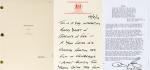
Collection of Five (5) Manuscript Letters from Greek-American Philosopher, Raphael Demos to Philosopher Henry David Aiken. Besides very few personal matters (Aiken rented a Lice-infested house from Demos), the letters are lengthy and full of content regarding philosophical questions. Demos thanks Aiken for his “thoughtful comments about my article on ‘Society and the Individual’ and Demos reflects on Aiken: “Now as to your point that goodwill is addressed to me which is capable of joys and sorrows and not just an angel – I will distinguish between respect and goodwill. Angels, because rational, have intrinsic worth, and so claim respect certainly. Value and respectability don’t imply capacity for feeling. But goodwill does imply that the recipient is a striving, failing, succeeding, up-ended individual, who has sorrows & grip – not just an angelic being. While the Greek identify man with his rationality, it is noticeable that common sense proceeds otherwise; when the Radcliffe girls say their Professor is so human, they don’t mean he is intellectual, they mean the opposite – that he has non-rational impulses and feelings…..” / The collection of letters originates from the personal collection of Henry Aiken and also comes with a scathing letter from American Philosopher Arthur Edward Murphy in which Murphy writes to Aiken about Raphael Demos and does not hold back in his evaluation of Demos and his Philosophy: “I just saw your remarks re Demos in the Journal. Very well done ! I think Demos is not very bright, however, and it is perhaps better not to give him too much publicity. I don’t think he will convert any one except for those already suffering from dithers & blithers. And it is a waste to refute him. Intelligent people don’t have to be convinced. And bigots like R.D. can’t be convinced. Strictly speaking, before Demos creates an obligation in others… he ought to say in plain unemotional prose what he means by such concepts as ‘God’ & ‘evidence’. It is perfectly possible that if we knew how he uses these terms, we would agree that what he says is trivially true. This discussion is presumably in the domain of logic. But discussion on that domain when one of the parties refuses to make explicit the rules of his game can never terminate in illumination. Nevertheless, I think you handled him neatly & have done yourself no harm as general opinion is concerned. He is a perfect horrible example of retrogression. Ugh ! A perfectly low grade person morally & intellectually nonregarding as a seer & defender of orthodoxy…… Have you seen Lazerowitz’s [Morris Lazerowitz] paper in Mind on Universals. It is highly provocative. I would like to discuss it with you….”.

Westport Point (Massachusetts), c.1944 – 1967. Octavo. 13 pages of letters by Raphael Demos to Aiken / [Plus:] 1 page of a manuscript letter by Arthur Edward Murphy to Aiken about Demos. Very good condition with only minor signs of wear. Original Letters or anything published by Raphael Demos or Arthur Edward Murphy, are very rare !

Show details

McKevitt, Christus Rex - An Irish Quarterly Journal of Sociology. A Collection of 24 Volumes

1110. [Curtayne, Alice] / McKevitt, P. / Lucey, C. / Conway, J. Jacobus / Christus Rex Society of Irish Diocesan Priests / Rísteard Ó Cíonga [Richard King as Illustrator] / etc.

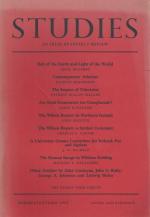
Alice Curtayne as Contributor to Irish Periodicals / Journals / Digests. The collection aims for completion and collects not only issues of periodicals with contributions by Alice Curtayne but hopes to complete each set of periodicals to which Alice Curtayne contributed between the years of 1930 and 1980, in order to allow for cross-referencing of contributors, study cooperation between illustrators and Alice Curtayne, her influence and acceptance as early female contributor in a men’s world, possibly even deciphering pseudonyms under which Curtayne might have written or essays she might have contributed to but her name was omitted; in general: circumstances which have not been detected yet. The Collection is documented thoroughly in professional images and descriptions on our website and includes to date: I. Alice Curtayne as Contributor to “The Irish Digest”: 1. “The Irish Digest” from September 1940 – including the article: Alice Curtayne – “Lament of an Author” / II. Alice Curtayne as Contributor to “Christus Rex”: “Christus Rex” – An Irish Quarterly Journal of Sociology. A Collection of 24 issues of the important and underrated publication “Christus Rex” including: 1. Volume XX, No.4 of “Christus Rex”: Alice Curtayne – “The Council and Women” ]. / III. Alice Curtayne as Contributor to “The Furrow”: “The Furrow” – Monthly Journal published by the Leinster Leader, Naas and Edited by Rev. J.G.McGarry. A Collection of 56 issues of the Journal, including two issues with Curtayne – publications: 1. “Saint Patrick in his Confession” – (In: “The Furrow” from March 1951) and 2. “Marillac Manor” (in “The Furrow” from July 1959) and 3. “Ecumenism in Dublin” (In “The Furrow” from February 1966) / IV. Alice Curtayne as Contributor to “The Capuchin Annual”. Including: 1. Alice Curtayne – “For the Septcentenary of St.Anthony of Padua (1231 – 1931)” – [including a portrait photograph of Alice Curtayne] / 2. Alice Curtayne – “Five Irish Saints” (″The Living Patrick” / “Saint Colmcille – Irishman” / “Saint Brendan – The Navigator” / “Saint Ita” / “The Method of Saint Columbus” / (In: Capuchin Annual 1945-1946 – with Illustrations in color by Stained Glass Artist, Rísteard Ó Cíonga [Richard King].

Naas, Christus Rex Publications, 1949 – 1967. Octavo. 81 Issues with different amounts of pages and content. Overall c. 4800 pages. Original Softcover. Excellent condition with some minor signs of wear only. Some of the issues with annotations and some with a former library-stamp. Very rare run of these periodicals which invited contributions from other women writers like Ita Meehan.

Show details

[Freke Family Provenance] / [Jacobo Freke ["Jacob"] / Scott, Sir Walter.

1113. [Freke Family Provenance] / [Jacobo Freke [″Jacob”] / Scott, Sir Walter.

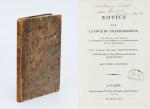
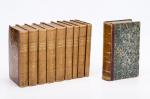
Collection of Works by Sir Walter Scott. Armorial Prize bindings with gilted crests to front and rear boards from Trinity-College Dublin, given to First Class Classics – Student [Literis Humanioribus] Jacobo Freke by Vice Provost Henry Wray (signed) between the years 1823 and 1828. The Collection includes: 1. Walter Scott – The Lay of the Last Minstrel – A Poem (The Twelth Edition, London, 1811) / 2. Walter Scott – The Lady of the Lake – A Poem (The Ninth Edition, Edinburgh, 1811 – Plays in the vicinity of Loch Katrine in the Western Highlands of Perthshire / With Notes to the Cantos) / 3. Walter Scott – Marmion: A Tale of Flodden Field. (The Seventh Edition, Edinburgh, 1811) / 4. Walter Scott – Rokery – A Poem (The Third Edition, Edinburgh, 1813) / 5. Walter Scott – The Lord of the Isles – A Poem (The Fourth Edition, Edinburgh, 1815). With the handwritten entry on the first page: “The Freke Books were given to me by the last of his daughter’s Sidney – 1936” [Written by Henry Longfield Conner].

Five Volumes. London / Edinburgh, Printed for Longman, Hurst , Rees, Orme and Brown and A.Constable and Co. Edinburgh; By James Ballantyne & Co. Edinburgh, 1811 – 1815. Octavo. 349, 433, 377, CXXVIII, 413, 443 pages. Hardcover / Original full leather in Mylar. Stunning, Armorial Prize bindings with gilted crests to front and rear boards from Trinity-College Dublin: “Reg. Elizabeth Juxta Dublin Coll. Sanctae Individuae Trinitatis”. Bindings worn and slightly cracked but all holding.

Show details

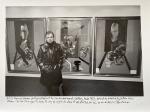
Original John Minihan-photograph of Seamus Heaney at his 70th birthday in his home in Dublin, in the year 2009

1114. Minihan, John / Heaney, Seamus.

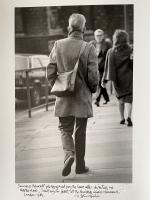
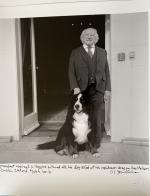
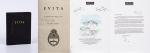
Original photograph of Seamus Heaney at his 70th birthday in his home in Dublin, in the year 2009 / Titled and Signed by John Minihan in 2014 / The vintage photograph is here mounted together with the original commemoration Stamp and signed First Day Cover of Anpost [The photograph was used as a Template for the creation of the Anpost Stamp in 2014].

Vintage Photograph on archival paper / Vintage First Day Cover with extra signature by John Minihan. Dublin, 2014. Image of the Photograph: 16 cm x 24 cm / First Day Cover: 18 cm x 12 cm. Overall Framed Size: 79 cm wide x 53,5 cm high. From the personal library of irish photographer John Minihan. Titled and signed by John Minihan. Beautifully framed (see multiple images on our website). Our company knows of an edition of four photographs and signed First Day Covers, which we bought from John Minihan in 2014 and which he signed in 2014. Later, signed First Day Covers are circulating and we have some of those in our archive for sale. But since John Minihan has sold the rights to most of his iconic images to UCC in Cork, none of the photographs are reprinted by the photographer and that makes this combination of the signed Seamus Heaney photograph, combined with the First Day Cover, signed actually on August 28th of 2014, very scarce. We have an edition of 3 (three) left. One is part of the “John Minihan Photography Collection”, which we are selling on our website (see under “Libraries & Collections”) and two are for sale on the free international market. The here offered, beautifully framed version, is the one which belongs to the John Minihan Collection and will only sell together with the collection.

Show details

Gilpin / Castle Freke Library - Observations Relative Chiefly to Picturesque Beauty, Made in the Year 1776

1122. Gilpin, William. [Castle-Freke Library Bookplates]

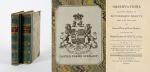
Collection of four Volumes (bound in two) by Gilpin – All from the historical library at Castle Freke (Castlefreke, West Cork / Ireland). The Volumes include: I. & II. Observations Relative Chiefly to Picturesque Beauty, Made in the Year 1776, on Several Parts of Great Britain; particularly the High-Lands of Scotland. [Second Edition, with an “Account of the Prints” bound to the rear] / III. Observations on the River Wye and several Parts of South Wales &c. relative chiefly to Picturesque Beauty; Made in the summer of the Year 1770 (Third Edition). / IV. An Essay on Prints – [″The chief intention of the following work was to put the elegant amusement of collecting prints, on a more rational footing; by giving the unexperienced collector a few principles and cautions to assist him”] (Fourth Edition with the printed dedication “To the Honorable Horace Walpole in Deference to his Taste in the Polite Arts; and the Valuable Researches he has made to improve them; the following work is inscribed by his most obedient and very humble servant, William Gilpin”). [Volumes I & II with 40 original illustrations and vintage 18th century maps [correctly 39 illustrations and one table], for example of Loch Lomond and the Firth of Forth/ all illustrations are vintage mezzotint-plates].

Mixed Editions. Four Volumes (bound in two). London, Printed for R. Blamire, Strand, 1792. Octavo. Pagination: Volume I: XI, [1], 221 pages with 24 mezzotints / Volume II: 195, XVI pages with 16 mezzotints and an “Account of the Prints” as well as “Translations of Latin Passages” / [Volume III]: [River Wye]: XVI, 152 pages with 16 (of 17) full – page mezzotints / [Volume IV]: [An Essay on Prints]: XIII, [3], 174 pages plus XI pages Index and 1 page Errata. Hardcover / Early 19th century quarter – morocco with gilt lettering and ornament on spine. Both volumes bound in unison. Very good + condition with only minor signs of external wear. Pages 185 – 191 of Volume I with some stronger browning. Otherwise the interior very clean. All mezzotints in very good or even better condition. This is the original copy from the historical Castle-Freke Library in West Cork (Ireland), with two armorial bookplates to front and rear pastedown with the family’s motto ‘Pro Patria’. With two pages of manuscript annotations by a contemporary hand with a reference between the common name “Tarbet” in Scotland and a place-name in County Kerry in Ireland” (pages 13 of Volume II) / another entry is on page 12 of Volume II regarding the name-sake “Loch-Loung” for a Lake of ships in Scotland and Ireland.

Show details

Guilleminot, Bœspflug et Cie. - Collection of 34 glass slides produced during the Exposition Universelle of 1900, Paris

1124. [Walter Benjamin Collection] – Guilleminot, Bœspflug et Cie. / [Paris during the World Exhibition in the Year 1900]

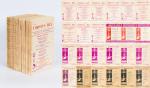
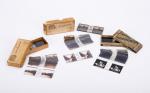
Collection of thirtyfour (34) original photographic glass-slides, allowing us to imagine the surroundings of Walter Benjamin’s “Arcades Project” and the Genesis of his Idea of “Paris as the Capital of the 19th Century”. While the Glass-Slides are NOT from Benjamin’s library or from one of his friends collections, they are contemporary artefacts which allow us to Timetravel into the Paris of Benjamin’s “Arcades” and illustrate Benjamin’s creation of the six sections of his “Arcades Project”: “Fourier, or the Arcades” ; “Daguerre, or the Panoramas”; “Grandville, or the World Exhibitions” ; “Louis-Philippe, or the Interior”; “Baudelaire, or the Streets of Paris”; “Hausmann, or the Barricades”. The slides were produced by Parisien Radio-Brom manufacturer of photographic plates and papers, “Guilleminot, Bœspflug et Cie”. The fantastic slides all produced around the time of the 1900 Paris Exposition (World’s Fair), known in french as “Exposition Universelle” in Paris. Included are photographic plates of the “Theatre Sarah-Bernhardt” at the “Place du Chatelet”, “Le Louvre”, “Paris – Buttes-Chaumont – Le Lac & Le Belvedere”, “Avenue de L’Opera”, “Place de Victoires”, “Gare St.Lazare – Rue de Rome”, L’Institut pris du pont des Arts”, “Gare Montsouris”, “Monument de Pasteur – Avenue de Breteuil”, “La Seine et L’Hotel de Ville”, “Pont au Change”, “Les Tuileries – avec “Charmeur d’Oiseaux”, “Le Conseil d’Etat”, “Avenue des Champs Elysees”, “Palais de Justice, Boulevard du Palais”, “Pont ALexandre III”, “Square d’Anvers”, “Grand Palais”, “Fontaine de Carpeaux”, “Jardin des Plantes” “Galerie de la Plaeontologie”, “Place du Carrousel – Arc de Triomphe”, “De Notre Dame sur l’Hotel Dieu – Tour St.Jacques – Sacre Coeur”, etc. Also included are some private images of family, picnic in the forests etc.

Paris, Exposition Universelle of 1900 / Guilleminot, Bœspflug et Cie., [c.1900]. 10.7 cm x 4.4 cm. 34 slides in three boxes (one of the boxes labelled: “Diapositifs de Verascope Richard”. Original Hardcover Boxes with glass-slides. Excellent condition with some minor signs of wear only.

Show details

Montague / Dorgan - Typescript Draft MS for a book of poetry by Theo Dorgan. With occasional manuscript corrections

1128. [John Montague Collection] – [Montague, John] Dorgan, Theo.

Typescript Draft MS for a book of poetry by Theo Dorgan. With occasional manuscript corrections / suggestions / annotations by Dorgan’s early mentor John Montague, the Typescript MS was held among the private papers of John Montague in his West Cork Home. The typescript includes poems like “Closed Circuit”, “The Promised Garden”. Montague is approving several of the poems by simply applying a tick. John Montague made suggestions in pencil on the structure of “Elegy for a Schoolfriend” and more in depth-suggestions on “Nasty Archer”, “Her Body”,″The Width of a Room Between Us”, “Return”, “Reconciliation”, “Sunday Afternoon”. When asked about helping to date this early draft of his poetry, Theo Dorgan immediately gets back to us and he places it from memory into the early 1980’s. Theo Dorgan was surprised and seemingly chuffed that John Montague held on to this Manuscript and he recalls: “These poems, some in revised versions, make up the backbone of my first published collection, ‘The Ordinary House of Love’.” Dorgan continues: “I’m happy to say that most of them survived Montague’s eagle eye, which was of course a great comfort to me at the time. Still is!” Some of these poems selected had previously been published as broadsheets etc. but the skeleton of the Draft hints already at readying it for publication. Theo Dorgan graciously gives us even more information: “Some of the poems in the eventual book go back to when I was a student, others were definitely written in the second half of the 80s. The bulk of it, however, is in this MS. I base my estimation in part on the fact that what you have is a typescript produced, it appears, on the IBM golfball machine that was the pride and joy of Triskel Arts Centre. That machine was bought in 1980 or 1981, I’m fairly sure of that. I was Literature Officer there, then.” Theo Dorgan was part of John Montague’s circle of mentored poets, even though in an email-exchange with him about this typescript he mentions that “John Montague worked far more with Thomas McCarthy, Maurice Riordan and Gregory O’Donoghue than he did with me, and in many ways Gregory O’Donoghue was at that stage the most accomplished of us all – the only one included in JM’s Faber Book.” What followed then in our conversation with Theo Dorgan is a great example why manuscripts, letters, autographs, typescripts and the connections we often make with documents from the past have such meaning in explaining our emotional ties with people who matter to us on our way of forming personality. They are memories transforming into images, floods of empathy and nostalgia for personal moments lost but treasured because they helped us form our values. Presented with the old typescript, Theo Dorgan’s emotionality is tangible and he confesses more in an internal dialogue with himself and John Montague than with us: “I’m sorry to say that the reason John Montague worked with those others more than he did with me is because, in my shameful, youthful arrogance, I much preferred to trust my own judgement, and also, I suspect, because I was closest to John in temperament and feared coming unduly under his influence. That said, there was no-one whose good opinion of a poem I valued more, and we were close all our lives after. Very likely it was a case of old stag/young stag ! Montague taught us by indirection, he made his extensive library of modern and contemporary poetry available to us without stint, would wait for us to find an affinity (as, e.g. mine with Robert Graves and Galway Kinnell) and would then, in a long, ongoing conversation, help us to understand what it might mean for our own poems that we felt such affinities. A guided companionship in reading and making, if you will.″

Ireland, c.1981-1982. A4. 43 pages typescripts. Paperclipped. Very good condition with only minor signs of external wear. Some fingerstaining and residue of rust from the paperclip. Wonderful and extremely valuable document of not only a collaboration between two of Ireland’s landmark writers but moreover witness to the becoming, the birth of a true poet. Also included (from a different source) is a second printing of the first edition of the subsequent publication “The Ordinary House of Love” – signed by Theo Dorgan. Right at the beginning of the printed version, instead of a dedication to John Montague, Theo Dorgan placed a quote from Montague’s poem “Wine Dark Sea”: ‘For there is no sea / it is all a dream there is no sea / except in the tangle / of our minds; / the wine dark / sea of history on which we all turn / turn and thresh / and disappear.’ (Collected Poems, page 255). Provenance of the annotated typescript: From the private collection of John Montague’s papers in his recently sold West Cork Home.

Show details

Vere Foster, Publisher's original "Private Library" - Correction-Copy of "The Two Duchesses"

1129. Foster, Vere [Henry Louis / Lewis] / [Georgiana Duchess of Devonshire / Elizabeth, Duchess of Devonshire] / [Publisher Blackie & Son – Publishing House in Glasgow].

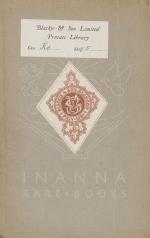
Publisher’s original “Private Library” – Correction-Copy of “The Two Duchesses”, for the “Second Edition”, with necessary alterations and wishes for changes marked by the corrector / publisher in pencil. Comparisons between pages allow to see the changes in effect if one compares the first and second edition. [A sensational find] / Georgiana, Duchess of Devonshire / Elizabeth, Duchess of Devonshire – Family Correspondence of and Relating to Georgiana, Duchess of Devonshire / Elizabeth, Duchess of Devonshire, Earl of Bristol (Bishop of Derby), The Countess of Bristol, Lord and Lady Byron, The Earl of Aberdeen, Sir Augustus Foster Bart, and Others, 1777-1859. First Edition. With 17 illustrations.

London / Glasgow and Dublin, Blackie & Son Limited, 1898. Octavo (16 cm x 22,5 cm). XII, 497 pages with 16 full-page-illustrations and one small vignette, showing the Two Duchesses in cordial embrace. Hardcover / Original, green publisher’s cloth with gilt lettering and ornament to spine and armorial supralibro to cover with the Motto of the “British chivalric Order of the Garter”: “Honi soit qui mal y pense” [″shame on anyone who thinks evil of it”]. Excellent, very clean binding. Very good condition with some minor signs of wear only. “Publisher’s Copy” with the publisher’s library sticker and bookplate to pastedown: “Blackie & Son Limited – Private Library – Case Kd – Shelf 5” – Exlibris of Blackie & Son below the library-sticker.

Show details

Small Archive of personal correspondence between irish-american writer John Montague and irish artist Louis Le Brocquy plus many and related items

1132. [John Montague Collection] – Montague, John / Louis le Brocquy / [Dupin, Jacques] / [Samuel Beckett].

Small Archive of personal correspondence between irish-american writer John Montague and irish artist Louis Le Brocquy plus many related items. The correspondence also includes John Montague touching on Samuel Beckett. The core of the collection includes 1. Extremely insightful and important, very personal manuscript-letter from John Montague to Louis Le Brocquy – Inside an envelope addressed by John Montague to Louis Le Brocquy at his french residence ‘Domaine des Combes’ with Louis Le Brocquy’s answer carefully tucked into the same envelope, treasured by John Montague. The densely filled, very personal 4-page-manuscript letter from John Montague, is dated Christmas 1981, written after “a sabbatical [..] on a long tour which led me as far as Los Angeles” and is a strong reflection of John Montague’s personal struggles, thoughts and influences as a writer; he talks about his ten years of teaching in the US “after O’Riada’s death led to a vacuum” and “enduring the semi-bourgeois limbo of Cork”. Montague speaks about the time “after the harness came off” and he “felt quite strange, and after thirty years my stammer returned in painful, nearly uncontrollable force”. Montague even touches on his fears about his health and continues “I clocked into a clinic for a rest cure….so far liver excellent, so it is not Sean or Brendan all over again (in any case, loving the stuff, as you do, I can’t overdrink; the tastebuds are against it)”. Montague dives into comparisons with Samuel Beckett: “″Did you realize that Sam Beckett was under analysis at the Tavistock Clinic for two years ? – The early Beckett is a smart alec; the break comes when he has to survive in post-war France and accept “his own darkness”. Montague also touches on his struggle with his mother “Isn’t it terrible that we spend up to nearly middle-[a]ge coping with the traumas of youth, with no way round it ? – I have cleared/cleaned/buried & forgiven my mother in my next book “The Dead Kingdom”….” – The letter continues to talk about books, “the Landslide Manuscript”, poetry and his work etc. etc. He mentions a Dupin “play” which “will travel in my Paris luggage”. Montague also touches on the subject of the Irish Troubles and writes “I have always, by the way, believed that 1916 may have been a mistake as Yeats said: “For England may keep faith – For all is said and done” / Montague speaks about “My own area of Tyrone is blessedly free from all but minor incidents” – Amazing document of confidence and trust between two irish landmark personalities. 2. Louis Le Brocquy’s answer to John Montague is dated “New Year’s Day 1981”[which should have been 1982]: A. Very personal manuscript Letter – a direct answer to Montague’s letter from “Christmas 1981” (1 sheet with both pages filled in ink and signed “Louis”) in which Le Brocquy reflects on the tense political situation with Northern Ireland and the overall worldwide tension of a looming war / Le Brocquy writes that he did have a “wild hope that when Charlie took office…that he and Thatcher might between them opted a ‘Rhodesian’ solution in the North” / Le Brocquy also writes about the eagerly awaited publication of “Selected Poems” of John Montague and he also asks John if “you thought of collecting Esteban’s and Dupin’s poems in French with your translations ?” – Le Brocquy offers to help with illustrations etc. – Both letters together in an envelope which suggests that John Montague received his letter to Louis le Brocquy back from the Le Brocquy-estate after Le Brocquy’s death. / Also included: B. A manuscript postcard with Le Brocquy’s “Girl in White” as a postcard-reproduction in which Le Brocquy suggests a project with John Montague and sends greetings to Montague’s wife Evelyn and the kids (in envelope from Carros,France) / 3. In his function as chairman of Amnesty International, Le Brocquy sends a callout by Amnesty International to John Montague and kindly asks him to support the cause. He sends the callout to John by adding a few manuscript, personal lines of affection (in envelope from Carros,France). 4. Manuscript Letter by Jacques Dupin of John Montague in which he also speaks of Louis le Brocquy / 5. Collection of eight Letters, one Postcard and some ephemeral items among which is the original catalogue “Ireland’s Literary Renaissance – 20th Century Portraits [including the Portraits of John Montague (and Thomas Kinsella) by Louis le Brocquy on page 62/63] created by James White for the Irish Promotion Exhibition called “Irish Ways” at Marshall Field’s in Chicago between 15th September – 4th October 1980. Includes a manuscript letter by James White to John Montague, dated 26/11/1980 / Also included in this lot is the very interesting letter by John Montague’s friend at Brown University, Elinor Shaffer, reporting to Montague about the large Writing programme at Brown with “shoals of Poets and Novelists representing different schools and regions”. Elinor Shaffer is very much enthusiastic that even Publisher’s in Residence are now present at Brown and she gives an example in Jay Loughlin [James Laughlin (1914-1997) American poet and the influential founder of New Directions Publishing] who “is the present incumbent and who is giving a seminar on his own list and is praised fro his public-spirited charity in handing out Pound and Williams.” Elinor Shaffer continues: “Gone are the days when students would riot at the hint of capitalist monopolygoverning the choice of texts. It seem Pound told him [James Laughlin] inthe twenties that he would one day make a good publisher (on being shown his poems). These ensconced and laundered literary figures seem a far cry from the old SF’ Berkeley poetic scene of the ‘60’s – Love, Elinor” / 6. Original State of New York Legislative Resolution No.1230 by Senator Daly, “Recognizing the distinguished author and poet John Montague” (John Montagu’s personal copy / 7. Three XXL – original Photographs showing John Montague and colleagues in honorary degree- Cloaks at UCC Cork, including a newspaper-article //

France / Ireland, Carros / Cork, 1980-1983. A4. 4 pages on two sheets (main Montague-letter), 2 pages on 1 sheet (Le Brocquy – answer), 1 postcard, 1 manuscript-letter from Jacques Dupin to John Montague (25.10.1978) about a translation of “L’Éboulement” (Dupin also speaks about Louis le Brocquy in the letter), several pages of letters (mostly typed and signed) from other figures in irish and international literature and art, collection of vintage photos of honorary doctorate degree-Montague at UCC Cork. Original Envelopes. Very good condition with only minor signs of external wear. Besides some ephemeral materials from personalities in Literature and Art, addressed to John Montague, the small collection includes several vintage photographs of John Montague, taken during his acceptance of a honorary Doctorate of Literature at UCC, Cork, as well as a Legislative Resolution by the State of New York (Senator Daly), recognizing and thanking the distinguished author and poet John Montague with this decree on May 26, 1987. Among the lesser interesting materials is a pamphlet titled “Ireland’s Literary Renaissance – 20th century Portraits” in which portraits by Louis Le Brocquy of John Montague and Thomas Kinsella are included. The pamphlet is accompanied by a letter from James White to John Montague in which he explains this being a publication that was released for an exhibition in Chicago and he apologises for the entries being “necessarily short but hopefully reasonably correct”. Provenance: From the private collection of John Montague’s papers in his recently sold West Cork Home.

Show details

[WalterBenjamin] Willy Haas - Die literarische Welt.

1134. [Walter Benjamin Collection] – [Benjamin, Walter] Haas, Willy / [Stefan Zweig / Heinrich Mann / Thomas Mann / etc.].

Die literarische Welt. [Mit zahlreichen Erstdrucken von Essays und Rezensionen von Walter Benjamin: “Die Technik des Schriftstellers in dreizehn Thesen” / Walter Benjamin – “Skandal im Théatre-Français” / Buch-Chronik der Woche von Walter Benjamin: “C.A.Bernoulli – Johann Jakob Bachofen und das Natursymbol” / Walter Benjamin – “J.P.Hebel – Ein Bilderrätsel zum 100.Todestag des Dichters” / Buch-Chronik der Woche von Walter Benjamin: “Franz Hessel” / Walter Benjamin – “Der Kaufmann im Dichter” / Walter Benjamin – “Aussicht ins Kinderbuch” (mit Abbildungen von Titeln aus der Sammlung Benjamin) / Walter Benjamin – “Noch ein Paar Neue Kinderreime” / Walter Benjamin – “Kinder” [I.Karussellfahrendes Kind / II. Zu Spaet gekommenes Kind / III. Verstecktes Kind”] / Titelseite als Kalenderblatt mit Karikatur-Portraits von Mitarbeitern der “Literarischen Welt”: u.a. Walter Benjamin, Walter Mehring, Willy Haas u.v.a. “Zum Neuen Jahr lasst Blumen sprechen” / “Wandkalender der “Literarischen Welt” fuer 1927 – Verse von Walter Benjamin / Zeichnungen von Rudolf Grossmann / Walter Benjamin – “Der Regisseur Meyerhold – In Moskau erledigt ?” – “Ein literarisches Gericht wegen der Inszenierung von Gogols ‘Revisor’” / Walter Benjamin – “Zur Lage der Russischen Filmkunst” / Walter Benjamin und Oscar A.H.Schmitz – “Eine Diskussion ueber russische Filmkunst und kollektivistische Kunst ueberhaupt” [Schmitz eroeffnet die Diskussion mit “Potemkinfilm und Tendenzkunst” – Walter Benjamin antwortet daraufhin dem “Bildungsphilister” Schmitz mit einer Polemik].

First Edition. Two Volumes with 94 Issues in total (31 issues in duplicate / 31 Hefte doppelt). Berlin, Ernst Rowohlt, 1925 – 1927. Folio. Pagninierung / Pagination of both Volumes: Volume I: The following 42 issues available in this collection are: 1. Jahrgang / Annual (1925): Nr. 2 und Nr. 4 / 2. Jahrgang (1926): Nr. 14, 19, Nr. 36 – Nr. 52 (17 Issues) / 3. Jahrgang / Annual (1927): Nr. 1-21 [Each issues with 8 pages with illustrations] / [Jedes Heft mit 8 Seiten incl. Abbildungen] / Volume II: 3. Complete Third Annual of 52 Issues for 1927): Kompletter 3. Jahrgang: Nummer 1-52. [Each issues with 8 pages with illustrations]. Illustrations in original woodcut-textillustrations are by Rudolf Großmann (several), Lili Réthi, B. F. Dolbin (several), Frans Masereel (several), George Grosz (Kinderzeichnungen), Renée Sintenis, Alfred Kubin, Max Beckmann, Man Ray and others. Hardcover (original title-wrappers inside a privately printed half-cloth binding) / Hardcover / Privater Halbleinenband der 20er Jahre. Small cutout to page 5 of Issue 2 (Advertising ? 8.4 x 14.5 cm) / (1 cm-tear to outer margin of all issues in Volume one – text not effected) / Titlepage of Issue 49, IInd Annual (1926), missing. Otherwise in very good condition with only minor signs of wear. While it would usually be desirable to have these issues in their original, unbound form, these two privately bound Volumes are actually a blessing and led to these issues to be preserved in unusually excellent condition. A Rare run of this peridocal, with a provenance of one “Frl. Nippoldt” (Miss Nippoldt), Weissenburgstr. 17 / Kleiner Ausschnitt auf Seite 5 der Nummer 2 von 1925 (Werbung) / (1 cm Einriss in den Rand der Nummern von Band 1 – Text nicht betroffen) / Titelblatt der Nummer 49 des II.Jahrgangs (1926) fehlt / Sonst sehr gut erhalten. Auch wenn eine ungebundene Broschur-Version dieser seltenen Zeitschrift einer Privatbindung normalerweise vorzuziehen ist, so ist in diesem Fall die Wahl der Bindung sehr gelungen und man ist fast dankbar wie gut die einzelnen Ausgaben dadurch erhalten wurden. Einige der Ausgaben haben einen alten Besitzvermerk: “Frl. Nippoldt” – “Weissenburgstr.17”, sowie gelegentliche, interessante Kommentare und Annotationen im Text (mit Bleistift)”.

Show details

Collection of twentyfive (25) important publications on the Geology and Oil / Gas Exploration of the World from the collection of Geologist William Daniel Gill

1137. [General Petroleum Exploration Section – William Daniel Gill Collection] – BP (British Petroleum Co.) [N.L.Falcon – BP House – Ropemaker Street] / Robert A. Boulware / and many others.

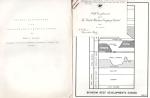
Collection of twentyfive (25) important publications on the Geology and Oil / Gas Exploration of the World from the collection of Geologist William Daniel Gill. The collection is housed inside a Solander Box labelled “Petroleum General” and includes interesting clippings on″Diverse Strategies of State Oil Companies”, interesting offprints, pamphlets and also Development – Sheets with Diagrams sent by BP to W.D.Gill. Included are for example: 1. Robert A. Boulware – “Seismic Exploration For Stratigraphic Traps in Canada” with sheets with revised Figures sent by N.L.Falcon at BP – “Bioherm Reef Developments Shaded” / 2. Anny B. Coury – “Bibliography for a Map of Prospective Hydrocarbon Provinces in the World” (1979) / 3. Peter Fitzgerald Moore (Shell Canada Ltd.) – “The Use of Geological Models in prospecting for Stratigraphic Traps” / 4. Gill’s personal copies of publications from the 7th World Petroleum Congress in Mexico 1967 (With a photographic section of places at which Petroleum Congresses happened before) / 5. Linton, D.L. and Moseley, F. – “The Geological Ages” (1968) / 6. Heinz Beckmann – “Modern Methods of Pay Evaluation in Oil and Gasfields” (1964) / 7. Theodore A. Link – “Theory of Transgressive and Regressive Reef (Bioherm) Development and Origin of Oil” (1950) / and many more publications like these.

1950 – c. 1990. Octavo and Quarto. Original Softcover. Very good condition with only minor signs of wear.

Show details

Collection of sixteen (16) important publications on the Geology of Romania and the Carpathian Region from the William Daniel Gill Collection

1139. [Romania / Carpathian Section – William Daniel Gill Collection] – Grigorias, N. / Constantinescu, N. / Sandulescu, Mircea / Murgeanu, G. / Patruy, I. / Popescu, M. / Manolescu, G. / Soare, E. / Patrulius, D. / Petrisor, I. / Pauliuc, S. / Costea, I. / Danet, T. / Boncev, Ekim.

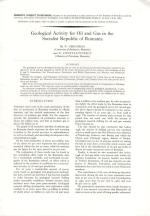
Collection of sixteen (16) important publications on the Geology of Romania and the Carpathian Region from the William Daniel Gill Collection. The collection includes the following publications (all first editions): 1. N. Grigoras and N. Constantinescu – “Geological Activity for Oil and Gas in the Socialist Republic of Rumania” (1969) / 2. N. Grigoras and I. Patrut and M.Popescu – Contributi La Cunoasterea Evolutiei Geologice A Platformei Moesice De Pe Teritoriul R.P.R. (1961) / 3. N. Grigoras – “Rolul Depresiunilor Premontane In Formarea Rocilor Bitumoase Din R.P.R.” (1957) / 4. N.Grigoras – “Consideratii Privind Legile De Raspindire Ale Zacamintelor De Petrol Si Gaze Din R.P.R” (1961) / 5. N.Grigoras and S.Pauliuc and I. Costea – “Date Noi Privind Faciesurile Paleogenului Dintre Vaile Oituz Si Bistrita” (1966) / 6. N.Grigoras and S.Pauliuc and I.Costea – “Noi Contributii Privind Depozitele Paleogene Dintre Vaile Zabala Si Oituz” (1964) / 7. N.Grigoras and S.Pauliuc and I. Costea – “Date Noi Privind Depozitele Paleogene Dintre Valea Putnei Si Valea Buzaului” (1963) / 8. N.Grigoras and T. Danet – “Contributi La Cunoasterea Sisturilor Verzi Dobrogene” (1961) / 9. N.Grigoras – “Contributiuni La Cunoasterea Geologie Reg.Craiova – Caracal”(1961) / 10. N.Grigoras – “Geologie des Cisements de Petrole et de Gaz en Roumanie” (1966) – Inscribed and signed by N.Grigoras / 11. Ekim Boncev – “Probleme der Lineamenttekonik im oestlichen Teil der Balkanhalbinsel” (1965) / 12. G.Manolescu and E.Soare – “Unity of the Nature of the Relative Permeability Curves in Relation with The Different Wetting Fluid Phases of a Porous Medium and Possibility of their Analytical Expression” (1962) / 13. D.Patrulius – “Olistolitele Masivului Bucegi” (1963) – Inscribed and signed by Dan Patrulius to William Daniel Gill / 14. Mircea Sandulescu – “Stratigrafia Si Tectonica Molasei Micocene Din Regiunea Valea Mare – Berzunt – Onesti”(1959) / 15. M.Sandulescu – “La Structure de la Zone Cristallino-Mesozoique de L’Interieur de la Courbure des Carpathes” (1965) / 16. Geological Map of Poland – “Harta Geologica” Scara 1:200.000 – No.36. “Ploiesti” Nota explicativa de: M. Sandulescu et. al. (1968) /

1957 – 1969. Octavo and Quarto. Original Softcover. Very good condition with only minor signs of wear. Many publications inscribed and signed.

Show details

Collection of eight (8) important publications on the Geology and Oil / Gas Exploration of Iran / Persia from the collection of Geologist William Daniel Gill.

1147. [Iran / Persia Section – William Daniel Gill Collection] – Lees, George Martin / BP (British Petroleum Co.) / W.F.P. McLintock / W.D.Gill / H.J.Ansari / M.Davoudzadeh / A.F.Fox .

Collection of eight (8) important publications on the Geology and Oil / Gas Exploration of Iran / Persia from the collection of Geologist William Daniel Gill. The collection includes: 1. Activity Report of the Geological Survey of Iran – With a section on “Other Geological Activities in Iran” (Tehran – 12-16 May 1974) / 2. G.M.Lees – “The World’s Oilfields – Eastern Hemisphere” – “The Middle East” (With Diagrams on Persia, Iraq, Bahrein, Saudi Arabia, Qatar etc.) (c.1970) / 3. BP (The british Petroleum Company) – “Oil and Gas in Southwest Iran” (1956) / 4. W.F.P. McLintock – “On the metamorphism produced by the combustion of hydrocarbons in the Tertiary sediments of south-west Persia [IRAN] (1932) / 5. George Martin Lees – “Salzgletscher in Persien” (1927) / 6. H.J.Ansari – “Geology of Southern Meyaneh Basin in Azarbayjan, Iran” (1965) / 7. M.Davoudzadeh – “Geology and Petrography of the Area North of Nain, Central Iran” (With two maps in a pocket to the rear) (1972) / 8. W.D.Gill – “Petroleum Source Rocks and the Origin of Oil and Gas in Iran, Pakistan and the North Sea” – With a photograph of W.D.Gill inside the publication (Published in Tehran in 1978 – The Bulletin of The Iranian Petroleum Institute” (First Quarter) /

1932 – 1972. Octavo and Quarto. Original Softcover. Very good condition with only minor signs of wear.

Show details

Stanislaw Dzulynski and others - Collection of nine (9) important publications on the Geology of Poland from the William Daniel Gill Collection

1150. [Poland Section – William Daniel Gill Collection] – Birecki, Tadeusz / Cizancourt, Henry De / Dzulynski, Stanislaw / Radomski, Andrzej / Smith, Alec J. / Kinle, J. / Tokarski, Adam / Sokolowski, J.

Collection of ten (10) important publications on the Geology of Poland from the William Daniel Gill Collection. The collection includes the following publications (all first editions): 1. J.Sokolowski and A.Tokarski – “The Present State of Oil and Gas Geological Prospection in Poland” (1969) (together with a large colourful Tectonic Map of Poland: “Mapa Tektoniczna Polski” (Map is from 1974)) / 2. Adam Tokarski – “O stratygrafii salinarnego retu monokliny przedsudeckiej” (1965) / 3. Stanislaw Dzulynski – “O Zagadkowych Hieroglifach Na Gornych Powierzchniach Piaskowcow Beloweskich” [Translates: “Problematic hieroglyphs of probable organic origin from the Beloveza beds (Western Carpathians)] (1957) / 4. Stanislaw Dzulynski and Andrzej Radomski – “Pochodzenie sladow wleczenia na tle teorii pradow zawiesinowych” (1955) / 5. Stanislaw Dzulynski and Alec J.Smyth – “Flysch Facies” (english) – Inscribed and signed by Smith (1964) / 6. Stanislaw Dzulynski and Andrzej Radomski – “Zagadnienie Zyl Klastycznych w Osadach Fliszowych Na Tle Sedymetacji Fliszu Karpackiego” (Translates: “Clastik dikes in the Carpathian Flysch” / with an english section in the publication) (1957) / 7. Henry de Cizancourt – “Geology of Oil Fields of Polish Carpathian Mountains” (1931) / 8. Tadeusz Birecki – “Budowa Geologiczna Synkliny Bobowej” (1964) / 9. Julian Sokolowski – “Rola Halokinezy W Rozwoju Osadow Mezozoicznych I Kenozoicznych Struktury Mogilna I Synklinorium Mogilensko-Lodzkiego” [Translates: “The Role of Halokinesis in the Development of Mesozoic And Cainozoic Deposits of the Mogilno Structure and of the Mogilno-Lodz Synclinorum” – with 16 figures and 2 plates] (1966) / 10. Adam Tokarski – Udzial wapienia muszlowego w budowie Przedgorza Karpat (1965) /

1931 – 1969. Octavo and Quarto. Original Softcover. Very good condition with only minor signs of wear. Many publications inscribed and signed.

Show details

Franz Rosenzweig - Der Stern der Erlösung [Hand-Exemplar des Walter Benjamin-Freundes Florens Christian Rang].

1154. [Walter Benjamin Collection] – [Rang, Florens Christian / Benjamin, Walter] Rosenzweig, Franz.

Der Stern der Erlösung [Personal copy of Walter Benjamin’s friend “Florens Christian Rang” / Persönliches Exemplar aus der Bibliothek des Walter Benjamin-Freundes “Florens Christian Rang”. Voll signiert von Rang auf dem Titelblatt. Besitzvermerk von Florens Christian Rang in Tinte. Mit sehr interessanten Text-Markierungen in Buntstift und Bleistift, sowie zwei Annotationen zu Text-Verweisen im hinteren Einbanddeckel [hier kann nicht einwandfrei gesagt werden ob alle Anstreichungen von Rang sind da es zwei Formen von Anstreichungen gibt / Rang selbst hat nachweislich auch mit Buntstift markiert]. Die Handschrift mit dem Textverweis im Innendeckel deckt sich nicht mit online verfuegbaren Schriftproben Rang’s (siehe Abbildungen auf der Webseite des Florens Christian Rang Archivs)]. Bedeutender Fund für die Florens Christian Rang-Forschung da Walter Benjamin beide, Franz Rosenzweig und Florens Christian Rang, in seinem Essay, “Privilegiertes Denken – Zu Theodor Haeckers Vergil”, in einem Atemzug als bedeutende Kämpfer “gegen die Idolatrie des Geistes” nennt. Leider wird Benjamin’s Erwähnung von Rosenzweig und Rang oft nur verkürzt zitiert obwohl Benjamin in seinem Essay [1932] zu Haecker’s Vergil-Polemik noch einen Schritt weitergeht und die Bedeutung von entschärfenden, informierten und kompetenten Stimmen wie Rosenzweig und Rang hervorhebt. Benjamin schreibt in der wichtigen Passage: “Es ist nicht unsere Schuld, wenn der Verfasser [Haecker] das realpolitische Äquivalent seiner »Idee des Men­schen« in so peinliche Nähe rückt: jenes, im drastischen Sinne privilegierte, Verständnis der nichtabendländischen Völker, welches gekennzeichnet ist durch das Ineinanderwirken von Ausbeutung und Mission. So pflegt nun einmal die Kontrebande auszuschauen, die in das Musselin des reinen Geistes gewickelt, die Reisenden nach Wolkenkuckucksheim mit sich führen. Am allerwenigsten sollte die Theologie ein solches Wolkenkuckucksheim sein. Es sind denn auch in der Tat theologische Denker gewesen, die gerade in unserer Generation erschienen, um den Kampf gegen die Idolatrie des Geistes aufzunehmen: der Jude Franz Rosenzweig von der Sprache, der Protestant Florens Christian Rang von der Politik her. Nun hält allerdings auch Haecker sich für einen Sprachdenker so gut wie er ein Politiker ist, wennschon er vielleicht vorzieht, nicht dafür zu gelten. Aber das eben schließt ihn aus der Reihe der echten theologischen Denker aus, daß er die Philosophie der Sprache wie der Politik vom Geiste aus handhaben zu können meint, ohne weder mit der Philologie noch mit der Ökonomie näher sich einzulassen. Freilich – und so erst rückt der Sachverhalt ins rechte Licht – bei Rosenzweig und vollends bei Rang handelt es sich um häretisch gestimmte Männer, denen es nichts Unmögliches ist, die Tradition auf ihrem eigenen Rücken zu befördern, statt sie seßhaft zu verwalten.″ Die zahlreichen und sehr aufschlussreichen Anstreichungen in Rosenzweig’s Werk, bestätigen Benjamin’s Auffassung, da Sie uns erlauben Rang’s Transformierung vom Nationalisten zum politisch moderat eingestellten Konservativen, teilweise nachvollziehen zu können. Die Publikation Rosenzweigs fällt ausserdem in die kritische Phase von Rang’s Wandlung. Die “Deutsche Bauhütte”, Rang’s publizistisches Testament seiner Entfernung vom Nationalismus, erschien nur drei Jahre später. Die vorliegende Ausgabe ist eindrucksvoller Nachweis für die immer neue Bereitschaft Rangs zur völligen Aufgabe seiner Ideale und zur Offenheit gegenüber einem philosophischen und politischen Erweckungserlebnisses, begonnen mit der Abkehr vom Christentum und vollzogen mit der Lektüre des Magnum Opus eines jüdischen Philosophen dessen Werk er mit seinem Besitzeintrag für sich ganz privat legitimiert. Zum Zeitpunkt der Lektüre von Rosenzweig’s “Stern der Erlösung”, hatte Rang bereits durch Mitarbeit im Forte-Kreis seine wilhelminischen “Phantasmagorien einer preussischen Religion” [Christine Holste – “Der Forte-Kreis 910 – 1915”] abgelegt und war durch solch disperaten Kontakte wie zu Martin Buber und Gustav Landauer ein Kandidat für eben jene Evolution die Benjamin in ihm spüren musste. Benjamin, der Rang nicht nur persönlich kannte sondern ihn auch “erkannte”, schrieb an Scholem, dass er „seltsamerweise […] diesem Mann, ebenso wie seine Unterstützung und Bestätigung, das zu danken vermochte und danken mußte, was ich von deutscher Bildung Wesentlichstes in mich aufgenommen habe. Denn nicht nur, daß in diesem Bereiche die Hauptgegenstände unserer beharrlichen Betrachtung fast sämtlich dieselben waren – das Leben, das in diesen großen Gegenständen lebt, habe ich menschlich ganz allein in ihm lebendig gesehen, ausbrechend mit desto mehr vulkanischer Gewaltsamkeit, als es unter der Kruste des übrigen Deutschland erstarrt lag. Wenn ich mit ihm sprach, war nicht sowohl Harmonie in unsern Gedanken, als daß ich, wetterfest und athletisch, an dem unmöglichen, zerrissenen Massiv der seinigen mich versuchte und oft genug eine Zinne mit weitem Ausblick auf eigne unerschlossne Gedankenbereiche gewann. Sein Geist war von Wahnsinn durchzogen wie ein Massiv von Schluchten. Aber durch die Moralität dieses Mannes gewann Wahnsinn keine Macht über ihn.” / Of utmost interest for the evaluation of Rang’s development from nationalist to empathetic centrist. Benjamin famously mentions both, Florens Christian Rang and Franz Rosenzweig as equally important influences for his Generation in “fighting the Idolatry of the Spirit/Mind”. This makes Rang’s personal copy of Rosenzweig’s masterpiece an enormously interesting find; possibly even a key to Rang’s ideological and religious transformation].

Erste Ausgabe. Frankfurt am Main, J.Kauffmann Verlag, 1921. Oktav (16 cm x 22,5 cm). 532, [2] Seiten. Hardcover / Originaler Verlagseinband mit illustriertem und beschriftetem Einbanddeckel. Die seltene Publikation, aus der Bibliothek von Florens Christian Rang, wurde mit einem neuen Einbandrücken versehen und das originale Rückenschildchen wurde neu aufgezogen. Die Bindung ist firm, die originalen Vorsatzblätter wurden erhalten. Das sonst notorisch schlecht erhaltene Papier der Publikation, hier generell in aussergewöhnlich guter Erhaltung; allerdings mit einigen kleineren Schäden: Kleine Einrisse ohne Textverlust auf den Seiten 7-8 / Sehr feine Einrisse ohne Textverlust auf den Seiten 207 – 210 / Unschöne Ausrisse mit nur geringem Textverlust am Rand der Seiten 409 – 414.


Show details

Vere Foster, The Two Duchesses - Presentation copy with important manuscript letter [signed and inscribed]

1155. Foster, Vere [Henry Louis / Lewis] / [Georgiana Duchess of Devonshire / Elizabeth, Duchess of Devonshire].

The Two Duchesses – Georgiana, Duchess of Devonshire / Elizabeth, Duchess of Devonshire – Family Correspondence of and Relating to Georgiana, Duchess of Devonshire / Elizabeth, Duchess of Devonshire, Earl of Bristol (Bishop of Derby), The Countess of Bristol, Lord and Lady Byron, The Earl of Aberdeen, Sir Augustus Foster Bart, and Others, 1777-1859. First Edition. With 17 illustrations.

London / Glasgow and Dublin, Blackie & Son Limited, 1898. Octavo (16 cm x 22,5 cm). XII, 497 pages with 16 full-page-illustrations and one small vignette, showing the Two Duchesses in cordial embrace. Hardcover / Original, green publisher’s cloth with gilt lettering and ornament to spine and armorial supralibro to cover with the Motto of the “British chivalric Order of the Garter”: “Honi soit qui mal y pense” [″shame on anyone who thinks evil of it”]. Very good condition with some minor signs of wear only. “Presentation Copy of “The Two Duchesses” with Autograph / Manuscript – Letter by Vere Foster to his niece, Emily Albinia “Alba” Foster. With a stunning, unpublished, two-page manuscript letter, revealing several important details about the immediately favorable reviews and reception of the book “Two Duchesses” [″in the Daily Telegraph”] and Vere Foster’s disdain about some criticism from one J.Donohue [which led to an alteration in the second edition of the book]. Vere Foster is also expecting a review to appear in the “Athenaeum” but reports: “the Athenaeum has nothing yet”. Vere Foster apologizes to his niece for the delay in sending the book and explains that he had left 12 “parcels” with Blackie’s agent and gave instructions to send them, but a few days later found they had been “untouched”. One of the most important finds of Vere Foster – Material in recent years with no sign of similar material on offer in the past years on the international market.

Show details

[Middle East with Kuwait] Naylor, Collection of two (2) large boxes of materials regarding Kuwait, Iraq (near Basrah), Lebanon, Jordan (Halat Ammar and Al Mudawwara), Jordan in general, Arava Valley

1179. [David Naylor Geology & Petroleum Collection] – [Middle East Collection with Kuwait / Iran (Persia) / Yemen / Jordan] Naylor, David (Dave).

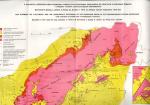
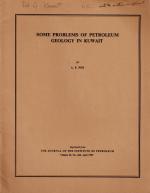
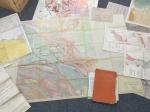
Collection of two (2) large boxes with rare and sometimes inscribed, Printed Materials and very rare Geological Surveys with Maps (for example it includes the very rare Geological Survey of Iran) from the private Reference- library of Geologist Prof. David (Dave) Naylor regarding Kuwait, Iraq (near Basrah), Lebanon, Jordan (Halat Ammar and Al Mudawwara), Jordan in general, Arava Valley (Dead Sea). See a full list of the contents below. These materials are all publications, sometimes official government papers or maps or academic publications from fellow geologists as well as for example official publications of talks given for OAPEC. All publications are revolving around the evaluation of Petroleum Deposits, Petroleum Geology and Stratigraphy or Hydrocarbon in the “Near and Middle East” – Maps and Charts and offprints, all of them rare publications and some only reprinted for private circulation. The focus of the publications ranges from very scientific-geological (″The Fauna of some Recent Marine Deposits near Basrah, Iraq”) to actual problems of prospecting (″Some Problems of Petroleum Geology in Kuwait”). These two boxes are only the Middle East Section of the David Naylor Collection (see all the Materials we own from the David Naylor-Reference library on our website). The collection also includes books related to the region (inquire for separate list).

Amman (Jordan) / Kuwait / Mexico / Potsdam, etc., c.1958 – 2011. Quarto. c. 1200 pages plus maps. Hardcover Boxes / Two bespoke made Boxes for the private reference library of Geologist David (Dave) Naylor. Very good condition with only minor signs of wear.

Show details

Page: 1 2 ... 9 10 11 12
: