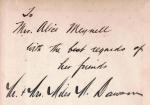
Association Copy (115 items)

[Behring, Collection of nine important Emil von Behring - offprints from the Exile-library of Prof. Dr. Hans Sachs

105. [Behring, Emil von / Sachs, Hans].

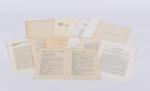
Collection of nine important Emil von Behring – offprints from the Exile-library of Prof. Dr. Hans Sachs, german serologist who had to flee Nazi-germany and died in his Dublin exile in 1945. The collection also includes the original offprint of an obituary for Emil von Behring, published by Hans Sachs in the “Frankfurter Zeitung” in 1917. The rare Offprint by Paul H. Römer (with epilogue by Emil von Behring), is inscribed to Dr.Hans Sachs. The offprints included in this collection are (in order of their publication): 1. Emil von Behring und F(ranz) Nissen – Ueber bacterienfeindliche Eigenschaften verschiedener Blutserumarten – Ein Beitrag zur Immunitätsfrage (1890) / 2. Emil von Behring und (Erich) Wernicke – Ueber Immunisierung und Heilung von Versuchsthieren bei der Diphterie (1892) / 3. Emil von Behring – Über Heilprinzipien, insbesondere über das ätiologische und das isopathische Heilprinzip (1898) / 4. Emil von Behring – Tuberkulosebekämpfung – Vortrag gehalten auf der Versammlung von Naturforschern und Ärzten am 25. September 1903 in Kassel – [Mit Besitzer-Stempel von Dr.Hans Sachs auf Titelbroschur und Titelblatt / With ownership-stamp of Dr. Hans Sachs on cover and titlepage] / 5. Paul H. Römer (Nebst einem Nachwort von Emil von Behring) – Ueber die Einwirkung des galvanischen Stroms auf Tetanus-Gift, Tetanus-Antitoxin und Toxin-Antitoxin-Gemische – [Mit handschriftlicher Widmung von Paul Römer “Herrn Dr.Sachs sehr ergebenst – v. V.” [vom Verfasser] / Inscribed by Paul Römer to Dr.Hans Sachs] – [Paul Heinrich Römer, from Kirchhain (near Marburg, Germany), was an important colleague of Behring and Sachs. Subsequently, Römer’s experimental studies on Polio led to Jonas Edward Salk’s and Albert Bruce Sabin’s development of a Polio-vaccine. According to Rudolf Siegert [specialist for the History of the ‘Marburg-Virus’], Paul Heinrich Römer, who died at the early age of 40 in World War One, should have been credited with discovery of the Polio remedy / 6. Emil von Behring – Indikationen für die serumtherapeutische Tetanusbekämpfung (1914) / 7. Emil von Behring und Richard Hagemann – Ueber das Diphterieschutzmittel “TA” (Mit 1 Tafel) und Emil von Behring – Aufgaben und Leistungen meines neuen Diphterieschutzmittels und Richard Hagemann – Ueber von Behring’s neues Diphterieschutzmittel (1914) / 8. Emil von Behring – Experimentelle Analyse und Theorie der anaphylaktischen und apotoxischen Vergiftung (1914) / 9. Emil von Behring (Marburg) – Indikationen und Kontra-Indikationen fuer das neue Diphterieschutzmittel “TA” (1914) / 10. Hans Sachs (Frankfurt) – Nachruf / Obituary – Emil von Behring (Sonderabdruck aus der Frankfurter Zeitung – Erstes Morgenblatt vom 4.April 1917)//

Wiesbaden / Leipzig / Berlin / Marburg , Thieme / Elwert / u.a., 1890 – 1914. Octavo. Original Softcover. Very good condition with only minor signs of external wear / The earliest offprint by Behring and Nissen, with a faded dampstain to lower margins / Otherwise with some minor fraying to some of the offprints only. Rare, important collection and very interesting association between Emil von Behring, the first Nobel Laureate of Medicine and Dr.Hans Sachs, jewish serologist and pioneer in efficient diagnosis of syphilis and one of the sad examples of the purge of scientists by Hitler’s regime in 1930s germany. / The collection also comes with several important works of Reference including: 1. A copy of Derek S. Linton’s stunning work: “Emil von Behring – Infectious Disease, Immunology, Serum Therapy” – [Philadelphia, 2005] / 2. also part of the collection is Arthur M. Silverstein’s work on “A History of Immunology” – [San Diego, 1992] see images of this collection !

EUR 1.800,-- 

Show details   Add to cart

Montague / Dorgan - Typescript Draft MS for a book of poetry by Theo Dorgan. With occasional manuscript corrections

107. [John Montague Collection] – [Montague, John] Dorgan, Theo.

Typescript Draft MS for a book of poetry by Theo Dorgan. With occasional manuscript corrections / suggestions / annotations by Dorgan’s early mentor John Montague, the Typescript MS was held among the private papers of John Montague in his West Cork Home. The typescript includes poems like “Closed Circuit”, “The Promised Garden”. Montague is approving several of the poems by simply applying a tick. John Montague made suggestions in pencil on the structure of “Elegy for a Schoolfriend” and more in depth-suggestions on “Nasty Archer”, “Her Body”,″The Width of a Room Between Us”, “Return”, “Reconciliation”, “Sunday Afternoon”. When asked about helping to date this early draft of his poetry, Theo Dorgan immediately gets back to us and he places it from memory into the early 1980’s. Theo Dorgan was surprised and seemingly chuffed that John Montague held on to this Manuscript and he recalls: “These poems, some in revised versions, make up the backbone of my first published collection, ‘The Ordinary House of Love’.” Dorgan continues: “I’m happy to say that most of them survived Montague’s eagle eye, which was of course a great comfort to me at the time. Still is!” Some of these poems selected had previously been published as broadsheets etc. but the skeleton of the Draft hints already at readying it for publication. Theo Dorgan graciously gives us even more information: “Some of the poems in the eventual book go back to when I was a student, others were definitely written in the second half of the 80s. The bulk of it, however, is in this MS. I base my estimation in part on the fact that what you have is a typescript produced, it appears, on the IBM golfball machine that was the pride and joy of Triskel Arts Centre. That machine was bought in 1980 or 1981, I’m fairly sure of that. I was Literature Officer there, then.” Theo Dorgan was part of John Montague’s circle of mentored poets, even though in an email-exchange with him about this typescript he mentions that “John Montague worked far more with Thomas McCarthy, Maurice Riordan and Gregory O’Donoghue than he did with me, and in many ways Gregory O’Donoghue was at that stage the most accomplished of us all – the only one included in JM’s Faber Book.” What followed then in our conversation with Theo Dorgan is a great example why manuscripts, letters, autographs, typescripts and the connections we often make with documents from the past have such meaning in explaining our emotional ties with people who matter to us on our way of forming personality. They are memories transforming into images, floods of empathy and nostalgia for personal moments lost but treasured because they helped us form our values. Presented with the old typescript, Theo Dorgan’s emotionality is tangible and he confesses more in an internal dialogue with himself and John Montague than with us: “I’m sorry to say that the reason John Montague worked with those others more than he did with me is because, in my shameful, youthful arrogance, I much preferred to trust my own judgement, and also, I suspect, because I was closest to John in temperament and feared coming unduly under his influence. That said, there was no-one whose good opinion of a poem I valued more, and we were close all our lives after. Very likely it was a case of old stag/young stag ! Montague taught us by indirection, he made his extensive library of modern and contemporary poetry available to us without stint, would wait for us to find an affinity (as, e.g. mine with Robert Graves and Galway Kinnell) and would then, in a long, ongoing conversation, help us to understand what it might mean for our own poems that we felt such affinities. A guided companionship in reading and making, if you will.″

Ireland, c.1981-1982. A4. 43 pages typescripts. Paperclipped. Very good condition with only minor signs of external wear. Some fingerstaining and residue of rust from the paperclip. Wonderful and extremely valuable document of not only a collaboration between two of Ireland’s landmark writers but moreover witness to the becoming, the birth of a true poet. Also included (from a different source) is a second printing of the first edition of the subsequent publication “The Ordinary House of Love” – signed by Theo Dorgan. Right at the beginning of the printed version, instead of a dedication to John Montague, Theo Dorgan placed a quote from Montague’s poem “Wine Dark Sea”: ‘For there is no sea / it is all a dream there is no sea / except in the tangle / of our minds; / the wine dark / sea of history on which we all turn / turn and thresh / and disappear.’ (Collected Poems, page 255). Provenance of the annotated typescript: From the private collection of John Montague’s papers in his recently sold West Cork Home.


Show details

Vere Foster, Publisher's original "Private Library" - Correction-Copy of "The Two Duchesses"

109. Foster, Vere [Henry Louis / Lewis] / [Georgiana Duchess of Devonshire / Elizabeth, Duchess of Devonshire] / [Publisher Blackie & Son – Publishing House in Glasgow].

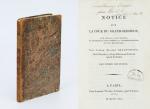
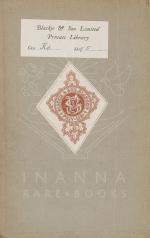
Publisher’s original “Private Library” – Correction-Copy of “The Two Duchesses”, for the “Second Edition”, with necessary alterations and wishes for changes marked by the corrector / publisher in pencil. Comparisons between pages allow to see the changes in effect if one compares the first and second edition. [A sensational find] / Georgiana, Duchess of Devonshire / Elizabeth, Duchess of Devonshire – Family Correspondence of and Relating to Georgiana, Duchess of Devonshire / Elizabeth, Duchess of Devonshire, Earl of Bristol (Bishop of Derby), The Countess of Bristol, Lord and Lady Byron, The Earl of Aberdeen, Sir Augustus Foster Bart, and Others, 1777-1859. First Edition. With 17 illustrations.

London / Glasgow and Dublin, Blackie & Son Limited, 1898. Octavo (16 cm x 22,5 cm). XII, 497 pages with 16 full-page-illustrations and one small vignette, showing the Two Duchesses in cordial embrace. Hardcover / Original, green publisher’s cloth with gilt lettering and ornament to spine and armorial supralibro to cover with the Motto of the “British chivalric Order of the Garter”: “Honi soit qui mal y pense” [″shame on anyone who thinks evil of it”]. Excellent, very clean binding. Very good condition with some minor signs of wear only. “Publisher’s Copy” with the publisher’s library sticker and bookplate to pastedown: “Blackie & Son Limited – Private Library – Case Kd – Shelf 5” – Exlibris of Blackie & Son below the library-sticker.

Show details

Adorno / Horkheimer / Haag - Wichtige Sammlung von bedeutenden Arbeitsexexemplaren / Widmungsexemplaren / Autorenexemplaren der Frankfurter Schule

110. [Adorno, Theodor W. / Horkheimer, Max / Benjamin, Walter] Haag, Karl-Heinz / Schweppenhäuser, Prof. Dr. Hermann.

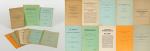
Wichtige Frankfurter Schule-Sammlung von sehr bedeutenden Arbeitsexemplaren / Widmungsexemplaren / Autorenexemplaren, Autographen und Manuskript-Notiz-Zetteln des deutschen Philosophen Karl-Heinz Haag. Die Arbeitsexemplare (Sieben Buchtitel in neun (9) Bänden) und handschriftlichen Notizen und Autographen (Postkarten), stammen aus der privaten Bibliothek des Adorno und Horkheimer- Schülers, Karl-Heinz Haag. Die in der Sammlung enthaltenen Manuskript-Notizen und Autographen (Postkarten von Horkheimer) sind inhaltsreich und teilweise auch deshalb sehr bedeutend, weil es unter Insidern bekannt ist, dass Haag auch während seiner aktiven Zeit innerhalb der Frankfurter Schule notorisch wenig veröffentlicht und schriftlich kommentiert hat. Beiliegt ausserdem ein Zeitungsausschnitt zur Adorno-Lehrstuhl-Nachfolge. / Important, stunning collection of seven, signed or/and annotated association-copies (working-copies) from the private library of german philosopher Karl-Heinz Haag. Haag was pupil, friend and colleague of Adorno and Horkheimer and was one of the members of the Frankfurt School of Social Theory and Social Research. The collection of annotated books (Seven Booktitles in nine (9) volumes) also includes ephemera (Autograph postcards, newspaper-clipping, as well as several manuscript – pages of significant notes and thoughts by Karl-Heinz Haag regarding topics discussed in some of these publications). The collection is especially important because Haag published and commented notoriously little during and after his tenure in Frankfurt. [See complete set of photographs of this collection on our website].

Frankfurt u.a., Suhrkamp / Institute of Social Research / Kohlhammer etc., 1955 – 1972. Octavo. Paginierung / Collation: 1. Adorno – Aspekte der Hegelschen Philosophie (Inscribed, signed): 59 Seiten mit zahlreichen Annotationen /59 pages, heavily annotated / 2. Haag – Kritik der neueren Ontologie (Author’s copy): 59 Seiten / 59 pages / 3. Adorno – Drei Studien zu Hegel (Inscribed, signed): 172 Seiten mit zahlreichen Annotationen / 172 pages with annotations / 4. Horkheimer – Zur Kritik der instrumentellen Vernunft (Inscribed, signed): 353 Seiten mit vielen Anmerkungen und Anstreichungen / 353 pages, heavily annotated / 5. Horkheimer – Kritische Theorie (Inscribed, signed): XIV, 376, XI, 358 Seiten mit zahlreichen Anmerkungen und Anstreichungen / XIV, 376, XI, 358 pages, heavily annotated / 6. Schweppenhäuser – Tractanda (Inscribed, signed): 141 Seiten / 141 pages. Original Softcover and Hardcover – Volumes. Sehr guter Erhaltungszustand aller Publikationen mit teilweise eingelegten, handschriftlichen Notizen sowie ein alter Zeitungsartikel in dem der Zersetzungsprozess der Frankfurter Schule kommentiert wird. / All publications in very good condition with minor signs of wear. Amazing provenance and possibly one of the last important collections surfacing from the library of a member of the Frankfurt School. The inter-connection between Adorno – Haag – Horkheimer, reflected in Haag’s annotations, lends itself for study and new publications of criticism.

EUR 3.800,-- 

Show details   Add to cart

Page: 1 2 ... 8 9 10 11 12
: