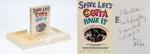


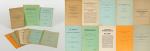
Association Copies (71 items)

[Behring, Collection of nine important Emil von Behring - offprints from the Exile-library of Prof. Dr. Hans Sachs

1. [Behring, Emil von / Sachs, Hans].

Collection of nine important Emil von Behring – offprints from the Exile-library of Prof. Dr. Hans Sachs, german serologist who had to flee Nazi-germany and died in his Dublin exile in 1945. The collection also includes the original offprint of an obituary for Emil von Behring, published by Hans Sachs in the “Frankfurter Zeitung” in 1917. The rare Offprint by Paul H. Römer (with epilogue by Emil von Behring), is inscribed to Dr.Hans Sachs. The offprints included in this collection are (in order of their publication): 1. Emil von Behring und F(ranz) Nissen – Ueber bacterienfeindliche Eigenschaften verschiedener Blutserumarten – Ein Beitrag zur Immunitätsfrage (1890) / 2. Emil von Behring und (Erich) Wernicke – Ueber Immunisierung und Heilung von Versuchsthieren bei der Diphterie (1892) / 3. Emil von Behring – Über Heilprinzipien, insbesondere über das ätiologische und das isopathische Heilprinzip (1898) / 4. Emil von Behring – Tuberkulosebekämpfung – Vortrag gehalten auf der Versammlung von Naturforschern und Ärzten am 25. September 1903 in Kassel – [Mit Besitzer-Stempel von Dr.Hans Sachs auf Titelbroschur und Titelblatt / With ownership-stamp of Dr. Hans Sachs on cover and titlepage] / 5. Paul H. Römer (Nebst einem Nachwort von Emil von Behring) – Ueber die Einwirkung des galvanischen Stroms auf Tetanus-Gift, Tetanus-Antitoxin und Toxin-Antitoxin-Gemische – [Mit handschriftlicher Widmung von Paul Römer “Herrn Dr.Sachs sehr ergebenst – v. V.” [vom Verfasser] / Inscribed by Paul Römer to Dr.Hans Sachs] – [Paul Heinrich Römer, from Kirchhain (near Marburg, Germany), was an important colleague of Behring and Sachs. Subsequently, Römer’s experimental studies on Polio led to Jonas Edward Salk’s and Albert Bruce Sabin’s development of a Polio-vaccine. According to Rudolf Siegert [specialist for the History of the ‘Marburg-Virus’], Paul Heinrich Römer, who died at the early age of 40 in World War One, should have been credited with discovery of the Polio remedy / 6. Emil von Behring – Indikationen für die serumtherapeutische Tetanusbekämpfung (1914) / 7. Emil von Behring und Richard Hagemann – Ueber das Diphterieschutzmittel “TA” (Mit 1 Tafel) und Emil von Behring – Aufgaben und Leistungen meines neuen Diphterieschutzmittels und Richard Hagemann – Ueber von Behring’s neues Diphterieschutzmittel (1914) / 8. Emil von Behring – Experimentelle Analyse und Theorie der anaphylaktischen und apotoxischen Vergiftung (1914) / 9. Emil von Behring (Marburg) – Indikationen und Kontra-Indikationen fuer das neue Diphterieschutzmittel “TA” (1914) / 10. Hans Sachs (Frankfurt) – Nachruf / Obituary – Emil von Behring (Sonderabdruck aus der Frankfurter Zeitung – Erstes Morgenblatt vom 4.April 1917)//

Wiesbaden / Leipzig / Berlin / Marburg , Thieme / Elwert / u.a., 1890 – 1914. Octavo. Original Softcover. Very good condition with only minor signs of external wear / The earliest offprint by Behring and Nissen, with a faded dampstain to lower margins / Otherwise with some minor fraying to some of the offprints only. Rare, important collection and very interesting association between Emil von Behring, the first Nobel Laureate of Medicine and Dr.Hans Sachs, jewish serologist and pioneer in efficient diagnosis of syphilis and one of the sad examples of the purge of scientists by Hitler’s regime in 1930s germany. / The collection also comes with several important works of Reference including: 1. A copy of Derek S. Linton’s stunning work: “Emil von Behring – Infectious Disease, Immunology, Serum Therapy” – [Philadelphia, 2005] / 2. also part of the collection is Arthur M. Silverstein’s work on “A History of Immunology” – [San Diego, 1992] see images of this collection !

EUR 1.000,-- 

Show details   Add to cart

[de Man, Collection of five books from the library of Paul de Man and Pat de Man

4. [de Man, Paul] Durling, Robert M. / Rosiek, Jan / Weiss, T.[Theodore Russell Weiss] / Hughes, Langston / Levin, Harry.

Collection of five books from the library of Paul de Man and Pat de Man. Three of the books inscribed/signed by the author’s. The Collection includes: 1. Robert M. Durling – The Figure of the Poet in Renaissance Epic. [Inscribed by Durling: “For Paul de Man – with fond regards – Bob”] / 2. Jan Rosiek – Figures of Failure – Paul de Man’s Criticism 1953-1970 [Unsigned / Not inscribed] / 3. T. Weiss – The Catch – The Twayne Library of Modern Poetry [Inscribed by Weiss: “To Pat + Paul, for real friendship + a book of their own soon. Ted”] / 4. Edward J. Mullen – Langston Hughes in the Hispanic World and Haiti [Inscribed by Langston Hughes: “Ma cheri Pat, may this slight token of appreciation for your past (and hopefully) future, intellectual ministrations to your petit frère recall to you fond memories of your peregination. Love, Langston – Chritmas, 1979 (Late, as usual)”] / 5. Karry Levin – Grounds for Comparison [Unsigned / Not inscribed].

Cambridge (Mass.) / Aarhus / New York and others, Harvard University Press / Archon Books / Twayne Publishers / Aarhus University Press, 1951 – 1992. 8°. Volume I.: VIII, 280 pages / Volume II: 247 pages / Volume III: 77 pages / Volume IV: 193 pages / Volume V: 423 pages. Three Volumes in original Hardcover with original dustjacket in protective Mylar / One Volume in Softcover / One Volume in Hardcover. Very good condition. From the library of Paul de Man. Especially the Durling – Volume of interest. Inscribed by the author: “For Paul de Man with fond regards – Bob”.

EUR 780,-- 

Show details   Add to cart

Montague / Dorgan - Typescript Draft MS for a book of poetry by Theo Dorgan. With occasional manuscript corrections

18. [John Montague Collection] – [Montague, John] Dorgan, Theo.

Typescript Draft MS for a book of poetry by Theo Dorgan. With occasional manuscript corrections / suggestions / annotations by Dorgan’s early mentor John Montague, the Typescript MS was held among the private papers of John Montague in his West Cork Home. The typescript includes poems like “Closed Circuit”, “The Promised Garden”. Montague is approving several of the poems by simply applying a tick. John Montague made suggestions in pencil on the structure of “Elegy for a Schoolfriend” and more in depth-suggestions on “Nasty Archer”, “Her Body”,″The Width of a Room Between Us”, “Return”, “Reconciliation”, “Sunday Afternoon”. When asked about helping to date this early draft of his poetry, Theo Dorgan immediately gets back to us and he places it from memory into the early 1980’s. Theo Dorgan was surprised and seemingly chuffed that John Montague held on to this Manuscript and he recalls: “These poems, some in revised versions, make up the backbone of my first published collection, ‘The Ordinary House of Love’.” Dorgan continues: “I’m happy to say that most of them survived Montague’s eagle eye, which was of course a great comfort to me at the time. Still is!” Some of these poems selected had previously been published as broadsheets etc. but the skeleton of the Draft hints already at readying it for publication. Theo Dorgan graciously gives us even more information: “Some of the poems in the eventual book go back to when I was a student, others were definitely written in the second half of the 80s. The bulk of it, however, is in this MS. I base my estimation in part on the fact that what you have is a typescript produced, it appears, on the IBM golfball machine that was the pride and joy of Triskel Arts Centre. That machine was bought in 1980 or 1981, I’m fairly sure of that. I was Literature Officer there, then.” Theo Dorgan was part of John Montague’s circle of mentored poets, even though in an email-exchange with him about this typescript he mentions that “John Montague worked far more with Thomas McCarthy, Maurice Riordan and Gregory O’Donoghue than he did with me, and in many ways Gregory O’Donoghue was at that stage the most accomplished of us all – the only one included in JM’s Faber Book.” What followed then in our conversation with Theo Dorgan is a great example why manuscripts, letters, autographs, typescripts and the connections we often make with documents from the past have such meaning in explaining our emotional ties with people who matter to us on our way of forming personality. They are memories transforming into images, floods of empathy and nostalgia for personal moments lost but treasured because they helped us form our values. Presented with the old typescript, Theo Dorgan’s emotionality is tangible and he confesses more in an internal dialogue with himself and John Montague than with us: “I’m sorry to say that the reason John Montague worked with those others more than he did with me is because, in my shameful, youthful arrogance, I much preferred to trust my own judgement, and also, I suspect, because I was closest to John in temperament and feared coming unduly under his influence. That said, there was no-one whose good opinion of a poem I valued more, and we were close all our lives after. Very likely it was a case of old stag/young stag ! Montague taught us by indirection, he made his extensive library of modern and contemporary poetry available to us without stint, would wait for us to find an affinity (as, e.g. mine with Robert Graves and Galway Kinnell) and would then, in a long, ongoing conversation, help us to understand what it might mean for our own poems that we felt such affinities. A guided companionship in reading and making, if you will.”

Ireland, c.1981-1982. A4. 43 pages typescripts. Paperclipped. Very good condition with only minor signs of external wear. Some fingerstaining and residue of rust from the paperclip. Wonderful and extremely valuable document of not only a collaboration between two of Ireland’s landmark writers but moreover witness to the becoming, the birth of a true poet. Also included (from a different source) is a second printing of the first edition of the subsequent publication “The Ordinary House of Love” – signed by Theo Dorgan. Right at the beginning of the printed version, instead of a dedication to John Montague, Theo Dorgan placed a quote from Montague’s poem “Wine Dark Sea”: ‘For there is no sea / it is all a dream there is no sea / except in the tangle / of our minds; / the wine dark / sea of history on which we all turn / turn and thresh / and disappear.’ (Collected Poems, page 255). Provenance of the annotated typescript: From the private collection of John Montague’s papers in his recently sold West Cork Home.

Show details

Franz Rosenzweig - Der Stern der Erlösung [Hand-Exemplar des Walter Benjamin-Freundes Florens Christian Rang].

24. [Walter Benjamin Collection] – [Rang, Florens Christian / Benjamin, Walter] Rosenzweig, Franz.

Der Stern der Erlösung [Personal copy of Walter Benjamin’s friend “Florens Christian Rang” / Persönliches Exemplar aus der Bibliothek des Walter Benjamin-Freundes “Florens Christian Rang”. Voll signiert von Rang auf dem Titelblatt. Besitzvermerk von Florens Christian Rang in Tinte. Mit sehr interessanten Text-Markierungen in Buntstift und Bleistift, sowie zwei Annotationen zu Text-Verweisen im hinteren Einbanddeckel [hier kann nicht einwandfrei gesagt werden ob alle Anstreichungen von Rang sind da es zwei Formen von Anstreichungen gibt / Rang selbst hat nachweislich auch mit Buntstift markiert]. Die Handschrift mit dem Textverweis im Innendeckel deckt sich nicht mit online verfuegbaren Schriftproben Rang’s (siehe Abbildungen auf der Webseite des Florens Christian Rang Archivs)]. Bedeutender Fund für die Florens Christian Rang-Forschung da Walter Benjamin beide, Franz Rosenzweig und Florens Christian Rang, in seinem Essay, “Privilegiertes Denken – Zu Theodor Haeckers Vergil”, in einem Atemzug als bedeutende Kämpfer “gegen die Idolatrie des Geistes” nennt. Leider wird Benjamin’s Erwähnung von Rosenzweig und Rang oft nur verkürzt zitiert obwohl Benjamin in seinem Essay [1932] zu Haecker’s Vergil-Polemik noch einen Schritt weitergeht und die Bedeutung von entschärfenden, informierten und kompetenten Stimmen wie Rosenzweig und Rang hervorhebt. Benjamin schreibt in der wichtigen Passage: “Es ist nicht unsere Schuld, wenn der Verfasser [Haecker] das realpolitische Äquivalent seiner »Idee des Men­schen« in so peinliche Nähe rückt: jenes, im drastischen Sinne privilegierte, Verständnis der nichtabendländischen Völker, welches gekennzeichnet ist durch das Ineinanderwirken von Ausbeutung und Mission. So pflegt nun einmal die Kontrebande auszuschauen, die in das Musselin des reinen Geistes gewickelt, die Reisenden nach Wolkenkuckucksheim mit sich führen. Am allerwenigsten sollte die Theologie ein solches Wolkenkuckucksheim sein. Es sind denn auch in der Tat theologische Denker gewesen, die gerade in unserer Generation erschienen, um den Kampf gegen die Idolatrie des Geistes aufzunehmen: der Jude Franz Rosenzweig von der Sprache, der Protestant Florens Christian Rang von der Politik her. Nun hält allerdings auch Haecker sich für einen Sprachdenker so gut wie er ein Politiker ist, wennschon er vielleicht vorzieht, nicht dafür zu gelten. Aber das eben schließt ihn aus der Reihe der echten theologischen Denker aus, daß er die Philosophie der Sprache wie der Politik vom Geiste aus handhaben zu können meint, ohne weder mit der Philologie noch mit der Ökonomie näher sich einzulassen. Freilich – und so erst rückt der Sachverhalt ins rechte Licht – bei Rosenzweig und vollends bei Rang handelt es sich um häretisch gestimmte Männer, denen es nichts Unmögliches ist, die Tradition auf ihrem eigenen Rücken zu befördern, statt sie seßhaft zu verwalten.” Die zahlreichen und sehr aufschlussreichen Anstreichungen in Rosenzweig’s Werk, bestätigen Benjamin’s Auffassung, da Sie uns erlauben Rang’s Transformierung vom Nationalisten zum politisch moderat eingestellten Konservativen, teilweise nachvollziehen zu können. Die Publikation Rosenzweigs fällt ausserdem in die kritische Phase von Rang’s Wandlung. Die “Deutsche Bauhütte”, Rang’s publizistisches Testament seiner Entfernung vom Nationalismus, erschien nur drei Jahre später. Die vorliegende Ausgabe ist eindrucksvoller Nachweis für die immer neue Bereitschaft Rangs zur völligen Aufgabe seiner Ideale und zur Offenheit gegenüber einem philosophischen und politischen Erweckungserlebnisses, begonnen mit der Abkehr vom Christentum und vollzogen mit der Lektüre des Magnum Opus eines jüdischen Philosophen dessen Werk er mit seinem Besitzeintrag für sich ganz privat legitimiert. Zum Zeitpunkt der Lektüre von Rosenzweig’s “Stern der Erlösung”, hatte Rang bereits durch Mitarbeit im Forte-Kreis seine wilhelminischen “Phantasmagorien einer preussischen Religion” [Christine Holste – “Der Forte-Kreis 910 – 1915”] abgelegt und war durch solch disperaten Kontakte wie zu Martin Buber und Gustav Landauer ein Kandidat für eben jene Evolution die Benjamin in ihm spüren musste. Benjamin, der Rang nicht nur persönlich kannte sondern ihn auch “erkannte”, schrieb an Scholem, dass er „seltsamerweise […] diesem Mann, ebenso wie seine Unterstützung und Bestätigung, das zu danken vermochte und danken mußte, was ich von deutscher Bildung Wesentlichstes in mich aufgenommen habe. Denn nicht nur, daß in diesem Bereiche die Hauptgegenstände unserer beharrlichen Betrachtung fast sämtlich dieselben waren – das Leben, das in diesen großen Gegenständen lebt, habe ich menschlich ganz allein in ihm lebendig gesehen, ausbrechend mit desto mehr vulkanischer Gewaltsamkeit, als es unter der Kruste des übrigen Deutschland erstarrt lag. Wenn ich mit ihm sprach, war nicht sowohl Harmonie in unsern Gedanken, als daß ich, wetterfest und athletisch, an dem unmöglichen, zerrissenen Massiv der seinigen mich versuchte und oft genug eine Zinne mit weitem Ausblick auf eigne unerschlossne Gedankenbereiche gewann. Sein Geist war von Wahnsinn durchzogen wie ein Massiv von Schluchten. Aber durch die Moralität dieses Mannes gewann Wahnsinn keine Macht über ihn.” / Of utmost interest for the evaluation of Rang’s development from nationalist to empathetic centrist. Benjamin famously mentions both, Florens Christian Rang and Franz Rosenzweig as equally important influences for his Generation in “fighting the Idolatry of the Spirit/Mind”. This makes Rang’s personal copy of Rosenzweig’s masterpiece an enormously interesting find; possibly even a key to Rang’s ideological and religious transformation].

Erste Ausgabe. Frankfurt am Main, J.Kauffmann Verlag, 1921. Oktav (16 cm x 22,5 cm). 532, [2] Seiten. Hardcover / Originaler Verlagseinband mit illustriertem und beschriftetem Einbanddeckel. Die seltene Publikation, aus der Bibliothek von Florens Christian Rang, wurde mit einem neuen Einbandrücken versehen und das originale Rückenschildchen wurde neu aufgezogen. Die Bindung ist firm, die originalen Vorsatzblätter wurden erhalten. Das sonst notorisch schlecht erhaltene Papier der Publikation, hier generell in aussergewöhnlich guter Erhaltung; allerdings mit einigen kleineren Schäden: Kleine Einrisse ohne Textverlust auf den Seiten 7-8 / Sehr feine Einrisse ohne Textverlust auf den Seiten 207 – 210 / Unschöne Ausrisse mit nur geringem Textverlust am Rand der Seiten 409 – 414.

Show details

[Schneemann, Eshleman, Bearings.

27. [Schneemann, Carolee] Eshleman, Clayton.

Bearings. [Two fantastic association copies of this limited edition / Both copies from the library of Carolee Schneemann / Both, beautifully inscribed by Clayton Eshleman to Carolee Schneemann and one copy with an annotation and several interesting textmarkings by Carolee Schneemann].

First Edition. Santa Barbara, Capricorn Press, 1971. 22.5cm x 15.3cm. 22 (6) pages. Original illustrated softcover. Excellent condition of noth editions, with only minor signs of external wear. This is one of Eshleman’s most personal works, which explains why he inscribed it in two consecutive years to Carolee Schneemann. Clayton Esleman writes about the impact Rilke’s “Letters to a Young Poet” had on him in 1959. Carolee Schneemann has marked several passages which were important to her, among which is: “for in the sense that what is deeply sick in man today is his hate for his body, in that he has loaded the most energetic word he has for love-making with all the hostility he feels against the act of love. Don’t fuck with me, we say. Keep your fucking hands off. Fuck you. And that word, like a jungle interwoven with all kinds of lianas and vines of tensions, desires, and hate, can’t now possibly convey just its erotic energy – “. / Eshleman also leaves a short biographical note (in print) at the end of this Volume in which he critically describes his consequential status quo: “…..Moved to New York City the summer of 1966…..the bottom fell out: I left my family, moved into a hole in the corner of Greenwich Avenue and Bank Street and entered Reichian Therapy…..Presently living in Sherman Oaks, California, with my wife Caryl – and, as of last week, loaned orgone accumulator sitting expectantly in Garage….– 28 January 1971”.

EUR 480,-- 

Show details   Add to cart

[George Crockett Strong] - U.S. Infantry Tactics, for the Instruction, Exercise and Manoeuvres of the United States Infantry

30. [Strong, George Crockett] The Secretary of War.

U.S. Infantry Tactics, for the Instruction, Exercise and Manoeuvres of the United States Infantry, Including Infantry of the Line, Light Infantry, and Riflemen. [with vintage cabinet photograph / Carte de visite of Union Brigadier General George Crockett Strong, loosely inserted and his name signed and dated to endpaper on April 28, 1863 (3 months prior to his death after being wounded during his assault on Fort Wagner on Morris Island, South Carolina)]. Prepared under the direction of the War Department, and Authorized and Adopted by the Secretary of War, May 1, 1861. Containing The School of the Soldier; The School of the Company; Instruction for Skirmishers; the General Calls, the Calls for Skirmishers, and the School of the Battalion; Including the Articles of War and a Dictionary of Military Terms.

Philadelphia, J.B. Lippincott & Co, 1861. 9.3 cm x 13.5 cm. Fold-out Frontispiece, 450 pages. 77 plates with illustrations of various stances and manoeuvres. 12 additional fold-out diagrams. Hardcover / publisher’s original blue pebbled cloth with gilt lettering and stamp on spine. Blind triple ruling and stamp on both boards. Very good condition with only minor signs of external wear. Corners slightly bumped. Very minor abrasion to cloth at bottom front corner. Very minor closed tear to page 25. Minor foxing occasionally throughout. Signs of dampstaining evident throughout otherwise clean and bright volume. Binding good and firm and tight bookblock. Inked annotation to title page. Ownership annotation to front pastedown. Embossed stamp of Wm B Sprague Jr, 51 State St, Albany on front endpaper. Endpaper also carries pencilled signature of George C Strong dated April 28 1862. Carte de visite of General Strong also loosely inserted.

EUR 475,-- 

Show details   Add to cart

[Tey, Josephine Tey - John Gielgud Collection of stunning Association copies

31. [Tey, Josephine / Daviot, Gordon] / [Gielgud, John].

Josephine Tey – John Gielgud Collection of stunning Association copies of Plays which crucially defined both of their careers as writers and actors. The collection includes important, signed and inscribed association – copies of the two significant productions “Richard of Bordeaux” and “Queen of Scots”, both from John Gielgud’s personal library and with manuscript inscriptions to John Gielgud [and Laurence [Larry] Olivier] by Josephine Tey, aka Gordon Daviot, aka Elizabeth MacKintosh. The collection includes: 1. Gordon Daviot [Josephine Tey] – “Richard of Bordeaux – A Play in Two Acts” – With John Gielgud’s Bookplate (Ex Libris). The ultimate Association-copy, warmly and lengthy inscribed by Josephine Tey to John Gielgud. First Edition. London, Victor Gollancz, 1933 / 2. “Richard of Bordeaux” – Original Programme of “The Streatham Hill Theatre”, 1934. Signed by John Gielgud / 3. Gordon Daviot [Josephine Tey] – “Richard of Bordeaux” – Original File-copy with dustjacket and Publisher’s wrapper “The Play of the Year” at the New Theatre” – First Edition, 1933 / 4. Gordon Daviot [Josephine Tey] Gordon Daviot – “Richard of Bordeaux – A Play in Two Acts” – [Fifth Edition, 1933] – Special Cast, Producer and Production-Signed copy and inscribed to one “Eileen Grainger”, with the most interesting dedications in manuscript signatures – Signed and inscribed by lead actor and producer John Gielgud [Richard II], Signed and inscribed by leading Lady, actress Gwen Ffrangcon-Davies, Signed and inscribed by Gordon Daviot [Josephine Tey], Also beautifully signed and inscribed with a musical score by Shakespeare-composer and Musical Director for John Gielgud, Herbert Menges OBE ! / 5. “Queen of Scots – A Play in Three Acts” – The Ultimate Association-copy, inscribed by Josephine Tey to her producer: “John Gielgud – from ‘his Gordon Daviot’ / July 1934” / 6. Gordon Daviot – “Queen of Scots – A Play in Three Acts” – Association-copy, signed and warmly and lengthy inscribed by Josephine Tey to Laurence Olivier / 7. Gordon Daviot [Josephine Tey] – “Richard of Bordeaux” – A Softcover-Version of the Play in Fourth Impression, 1933 / 8. Josephine Tey – “The Daughter of Time” – First Edition, Second Impression (Second Printing). London, Peter Davies, July 1951 [The First Edition was in June 1951]. Original Hardcover with the slightly frayed original dustjacket in Mylar / 9. John Gielgud – “Early Stages” – New and Revised Edition. London, The Falcon Press, 1948. With pages of detail about the work of John Gielgud with Gordon Daviot [Josephine Tey] / 10. Jennifer Morag Henderson – “Josephine Tey – A Life” – With a Foreword by Val McDermid. Sandstone Press, 2015 //

London, Victor Gollancz, 1933 – 1948. Octavo. Hardcover / Original Publisher’s cloth. Very good condition with only minor signs of wear.

EUR 12.800,-- 

Show details   Add to cart

Page: 1 2
: