Philosophy Rare (215 items)

Sartre / Beckett / de Beauvoir etc. - Les Temps Modernes [Modern Times]. Revue Mensuelle. 88 (eightyeight) Issues

2. Sartre, Jean-Paul / de Beauvoir, Simone / Merleau-Ponty, Maurice / Beckett, Samuel / Benjamin, Walter etc.

Les Temps Modernes [Modern Times]. Revue Mensuelle. 88 (eightyeight) Issues / Volumes of this important Periodical / [Lot de 88 numéros: 2e année – No. 13 (Octobre 1946) – 11e année – No. 125 (Juin 1956)]. The collection includes reviews / critique of famous essays like Simone de Beauvoir’s “La Lesbienne” and Jean-Paul Sartre’s “La mort dans l’ame” and “Le Diable et le Bon Dieu” / Werner Krauss – “Un Allemand a Paris / Enno Kind – La Resistance allemande etc. The collection includes: Year 1947: 2e année, No.13 / 2e année, No.14 / 2e année, No.22 / 2e année, No.23/24 / 2e année, No.25 / 3e année, No.26 / 3e année, No. 27 / Year 1948: 3e année, No.28 / 3e année, No.29 / 3e année, No. 30 / 3e année, No.31 / 3e année, No.32 / 3e année, No.33 / 3e année, No.34 / 3e année, No.35 / 3e année, No.36 / 4e année, No.37 / 4e année, No.38 / Year 1949: 4e année, No.39 / 4e année, No.40 / 4e année, No.41 / 4e année, No.42 / 4e année, No.43 / 4e année, No.44 / 5e année, No.45 / 5e année, No.46-47 / 5e année, No.48 / 5e année, No.49 / 5e année, No.50 / Year 1950: 5e année, No.51 / 5e année, No.43 / 5e année, No.54 / 5e année, No.55 / 5e année, No.56 / 6e année, No.57 / 6e année, No.58 / 6e année, No.59 / 6e année, No.60 / Year 1951: 6e année, No.63 / 6e année, No.64 / 6e année, No.65 / 6e année, No.66 / 6e année, No.67 / 6e année, No.68 / 7e année, No.69 / 7e année, No.70 / 7e année, No.71 / 7e année, No.72 / 7e année, No.73 / 7e année, No.74 / Year 1952: 7e année, No.75 / 7e année, No.76 / 7e année, No.77 / 7e année, No.79 / 7e année, No.80 / 8e année, No.81 / 8e année, No.82 / 8e année, No.83 / 8e année, No.84-85 / 8e année, No.86 / Year 1953: 8e année, No.87 / 8e année, No.88 / 8e année, No.89 / 8e année, No.90 / 8e année, No.91 / 9e année, No.92 / 9e année, No.93-94 / 9e année, No.95 / Year 1954: 9e année, No.99 / 9e année, No.100 / 9e année, No.101 / 9e année, No.102 / 9e année, No.103 / 10e année, No.104 / 10e année, No.105 / 10e année, No.106 / 10e année, No.107 / 10e année, No.108 / Year 1955: 10e année, No.109 / 10e année, No.110 / 10e année, No.111 / 10e année, No.112-113 (Numero Special: “La Gauche” – avec Simone de Beauvoir, Victor Leduc, Maurice Duverger, Claude Lanzmann, Jean T. Desant etc. etc.) / 10e année, No.114-115 / Year 1956: 11e année, No.121 / 11e année, No.122 / 11e année, No.123 / 11e année, No.124 / 11e année, No.125 //

Paris, Les Temp Modernes [Gallimard (1945-1948) / Julliard (1949-1965), 1946 -1956. Octavo. Original Softcover / Broche Originale. Some of the issues with condition-problems but in general in good to very good condition with some of the issues having frayed and detached wrappers. Only one frontwrapper with titles missing. A very rare run of 88 issues of this rare periodical. 88 Issues with interruptions in between.

EUR 980,-- 

Show details   Add to cart

Collection of important publications by and on the British Philosopher Bertrand Russell

6. Russell, Bertrand.

Collection of important publications by and on the British Philosopher Bertrand Russell [some of the publications from libraries of important philosophers like Quine]. The collection includes: 1. Bertrand Russell – War – The Offspring of Fear (First Edition – London, 1914) / 2. Bertrand Russell – Ideas that have harmed Mankind – Man’s Unfortunate Experience with his self-made enemies, including sadistic Impulses, Religion, Superstition, Envy, Economic Nationalism, Pride, Racism, Sex Superiority, Creeds and other evil things. (First Edition – Girard (Kansas), 1946) [From the library of Henry David Aiken] / 3. Bertrand Russell – Scientific Method in Philosophy (First Edition – Oxford, 1914) / 4. [Bertrand Russell] Paul Foulkes – Wisdom of the West (London, 1960) / 5. Bertrand Russell – The Analysis of Mind (London, 1951) / 6. Bertrand Russell – “Per Aspera ad Astra” (in: “Science and the Future of Mankind” – together with essays by Albert Einstein, Robert Oppenheimer others, this copy used to belong to the library of Boston’s “Simmons College”) / 7. Ronald Jager – The Development of Bertrand Russell’s Philosophy [From the library of philosopher Willard Van Orman Quine (with inscription and signed by Jager to Quine)] / 8. Quine, Willard Van Orman / Heimpel, Carl G./ Wang, Hao – Symposium – Issue on Bertrand Russell by “The Journal of Philosophy”: ‘The Philosophy of Bertrand Russell’: Willard van Orman Quine – Russell’s Ontological Development / Carl G. Hempel – On Russell’s Phenomenological Constructionism / Hao Wang – Russell and Philosophy // A Historical Survey of Western Philosophy in its Social and Political Setting.

London / Oxford / Den Haag and others, Clarendon Press / Dr.Junk / Allen and Unwin / Macdonald & Co. Ltd., 1914 – 1972. Original Hardcover and Softcover – Bindings. Only one publications iwth some minor damage, otherwise all publications in very good or even better condition with only minor signs of external wear.

EUR 880,-- 

Show details   Add to cart

Derham, Astro-Theology: or, a Demonstration of the Being and Attributes of God,

25. Derham, William [Philosopher and Scientist] / [John Senex (Cartographer)].

Astro-Theology: or, a Demonstration of the Being and Attributes of God, From a Survey of the Heavens [Including a Chapter on the “Attraction of Gravity”].

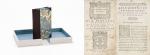
Sixth Edition. London, W. Innys, 1731. Octavo. [16], LVI, [8], 246 pages,[10 pages of Index], [with 3 astronomical foldout engravings by english Cartographer and Explorer John Senex / The Engravings show the Ptolemaic Geocentric System with the Earth as centre of the Universe and discuss other models as well by pointing to pages within the text that reflect on the illustrations / Two of the Engravings are showing the Stars and Constellations over Europe, the Mediterranean, Asia Minor, Asia etc.]. ]. Original Hardcover / bound in contemporary panelled calf. The book has been sympathetically rebacked to style. Besides a spot of hard green adhesive to the front board in very good condition. The armorial 18th century bookplate of one Dr. Blackett appears on the first pastedown [″A coat of arms divided into three portions, with three stars and three scallop shells throughout. At the helm is the head of an eagle, and elaborate mantling, flowers, and leaves surround the crest. Below is the motto ‘Nous Travailler ons dans L’Esperance’”] / The text of this rare and notoriously underrated book is complete and clean with the three foldout engravings of the cosmos to the rear with only a small archival paper restoration to one of the engravings.

EUR 480,-- 

Show details   Add to cart

Adorno / Horkheimer / Haag - Wichtige Sammlung von bedeutenden Arbeitsexexemplaren / Widmungsexemplaren / Autorenexemplaren der Frankfurter Schule

29. [Adorno, Theodor W. / Horkheimer, Max / Benjamin, Walter] Haag, Karl-Heinz / Schweppenhäuser, Prof. Dr. Hermann.

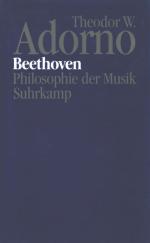
Wichtige Frankfurter Schule-Sammlung von sehr bedeutenden Arbeitsexemplaren / Widmungsexemplaren / Autorenexemplaren, Autographen und Manuskript-Notiz-Zetteln des deutschen Philosophen Karl-Heinz Haag. Die Arbeitsexemplare (Sieben Buchtitel in neun (9) Bänden) und handschriftlichen Notizen und Autographen (Postkarten), stammen aus der privaten Bibliothek des Adorno und Horkheimer- Schülers, Karl-Heinz Haag. Die in der Sammlung enthaltenen Manuskript-Notizen und Autographen (Postkarten von Horkheimer) sind inhaltsreich und teilweise auch deshalb sehr bedeutend, weil es unter Insidern bekannt ist, dass Haag auch während seiner aktiven Zeit innerhalb der Frankfurter Schule notorisch wenig veröffentlicht und schriftlich kommentiert hat. Beiliegt ausserdem ein Zeitungsausschnitt zur Adorno-Lehrstuhl-Nachfolge. / Important, stunning collection of seven, signed or/and annotated association-copies (working-copies) from the private library of german philosopher Karl-Heinz Haag. Haag was pupil, friend and colleague of Adorno and Horkheimer and was one of the members of the Frankfurt School of Social Theory and Social Research. The collection of annotated books (Seven Booktitles in nine (9) volumes) also includes ephemera (Autograph postcards, newspaper-clipping, as well as several manuscript – pages of significant notes and thoughts by Karl-Heinz Haag regarding topics discussed in some of these publications). The collection is especially important because Haag published and commented notoriously little during and after his tenure in Frankfurt. [See complete set of photographs of this collection on our website].

Frankfurt u.a., Suhrkamp / Institute of Social Research / Kohlhammer etc., 1955 – 1972. Octavo. Paginierung / Collation: 1. Adorno – Aspekte der Hegelschen Philosophie (Inscribed, signed): 59 Seiten mit zahlreichen Annotationen /59 pages, heavily annotated / 2. Haag – Kritik der neueren Ontologie (Author’s copy): 59 Seiten / 59 pages / 3. Adorno – Drei Studien zu Hegel (Inscribed, signed): 172 Seiten mit zahlreichen Annotationen / 172 pages with annotations / 4. Horkheimer – Zur Kritik der instrumentellen Vernunft (Inscribed, signed): 353 Seiten mit vielen Anmerkungen und Anstreichungen / 353 pages, heavily annotated / 5. Horkheimer – Kritische Theorie (Inscribed, signed): XIV, 376, XI, 358 Seiten mit zahlreichen Anmerkungen und Anstreichungen / XIV, 376, XI, 358 pages, heavily annotated / 6. Schweppenhäuser – Tractanda (Inscribed, signed): 141 Seiten / 141 pages. Original Softcover and Hardcover – Volumes. Sehr guter Erhaltungszustand aller Publikationen mit teilweise eingelegten, handschriftlichen Notizen sowie ein alter Zeitungsartikel in dem der Zersetzungsprozess der Frankfurter Schule kommentiert wird. / All publications in very good condition with minor signs of wear. Amazing provenance and possibly one of the last important collections surfacing from the library of a member of the Frankfurt School. The inter-connection between Adorno – Haag – Horkheimer, reflected in Haag’s annotations, lends itself for study and new publications of criticism.


EUR 4.800,-- 

Show details   Add to cart

Franz Rosenzweig - Der Stern der Erlösung [Hand-Exemplar des Walter Benjamin-Freundes Florens Christian Rang].

31. [Walter Benjamin Collection] – [Rang, Florens Christian / Benjamin, Walter] Rosenzweig, Franz.

Der Stern der Erlösung [Personal copy of Walter Benjamin’s friend “Florens Christian Rang” / Persönliches Exemplar aus der Bibliothek des Walter Benjamin-Freundes “Florens Christian Rang”. Voll signiert von Rang auf dem Titelblatt. Besitzvermerk von Florens Christian Rang in Tinte. Mit sehr interessanten Text-Markierungen in Buntstift und Bleistift, sowie zwei Annotationen zu Text-Verweisen im hinteren Einbanddeckel [hier kann nicht einwandfrei gesagt werden ob alle Anstreichungen von Rang sind da es zwei Formen von Anstreichungen gibt / Rang selbst hat nachweislich auch mit Buntstift markiert]. Die Handschrift mit dem Textverweis im Innendeckel deckt sich nicht mit online verfuegbaren Schriftproben Rang’s (siehe Abbildungen auf der Webseite des Florens Christian Rang Archivs)]. Bedeutender Fund für die Florens Christian Rang-Forschung da Walter Benjamin beide, Franz Rosenzweig und Florens Christian Rang, in seinem Essay, “Privilegiertes Denken – Zu Theodor Haeckers Vergil”, in einem Atemzug als bedeutende Kämpfer “gegen die Idolatrie des Geistes” nennt. Leider wird Benjamin’s Erwähnung von Rosenzweig und Rang oft nur verkürzt zitiert obwohl Benjamin in seinem Essay [1932] zu Haecker’s Vergil-Polemik noch einen Schritt weitergeht und die Bedeutung von entschärfenden, informierten und kompetenten Stimmen wie Rosenzweig und Rang hervorhebt. Benjamin schreibt in der wichtigen Passage: “Es ist nicht unsere Schuld, wenn der Verfasser [Haecker] das realpolitische Äquivalent seiner »Idee des Men­schen« in so peinliche Nähe rückt: jenes, im drastischen Sinne privilegierte, Verständnis der nichtabendländischen Völker, welches gekennzeichnet ist durch das Ineinanderwirken von Ausbeutung und Mission. So pflegt nun einmal die Kontrebande auszuschauen, die in das Musselin des reinen Geistes gewickelt, die Reisenden nach Wolkenkuckucksheim mit sich führen. Am allerwenigsten sollte die Theologie ein solches Wolkenkuckucksheim sein. Es sind denn auch in der Tat theologische Denker gewesen, die gerade in unserer Generation erschienen, um den Kampf gegen die Idolatrie des Geistes aufzunehmen: der Jude Franz Rosenzweig von der Sprache, der Protestant Florens Christian Rang von der Politik her. Nun hält allerdings auch Haecker sich für einen Sprachdenker so gut wie er ein Politiker ist, wennschon er vielleicht vorzieht, nicht dafür zu gelten. Aber das eben schließt ihn aus der Reihe der echten theologischen Denker aus, daß er die Philosophie der Sprache wie der Politik vom Geiste aus handhaben zu können meint, ohne weder mit der Philologie noch mit der Ökonomie näher sich einzulassen. Freilich – und so erst rückt der Sachverhalt ins rechte Licht – bei Rosenzweig und vollends bei Rang handelt es sich um häretisch gestimmte Männer, denen es nichts Unmögliches ist, die Tradition auf ihrem eigenen Rücken zu befördern, statt sie seßhaft zu verwalten.” Die zahlreichen und sehr aufschlussreichen Anstreichungen in Rosenzweig’s Werk, bestätigen Benjamin’s Auffassung, da Sie uns erlauben Rang’s Transformierung vom Nationalisten zum politisch moderat eingestellten Konservativen, teilweise nachvollziehen zu können. Die Publikation Rosenzweigs fällt ausserdem in die kritische Phase von Rang’s Wandlung. Die “Deutsche Bauhütte”, Rang’s publizistisches Testament seiner Entfernung vom Nationalismus, erschien nur drei Jahre später. Die vorliegende Ausgabe ist eindrucksvoller Nachweis für die immer neue Bereitschaft Rangs zur völligen Aufgabe seiner Ideale und zur Offenheit gegenüber einem philosophischen und politischen Erweckungserlebnisses, begonnen mit der Abkehr vom Christentum und vollzogen mit der Lektüre des Magnum Opus eines jüdischen Philosophen dessen Werk er mit seinem Besitzeintrag für sich ganz privat legitimiert. Zum Zeitpunkt der Lektüre von Rosenzweig’s “Stern der Erlösung”, hatte Rang bereits durch Mitarbeit im Forte-Kreis seine wilhelminischen “Phantasmagorien einer preussischen Religion” [Christine Holste – “Der Forte-Kreis 910 – 1915”] abgelegt und war durch solch disperaten Kontakte wie zu Martin Buber und Gustav Landauer ein Kandidat für eben jene Evolution die Benjamin in ihm spüren musste. Benjamin, der Rang nicht nur persönlich kannte sondern ihn auch “erkannte”, schrieb an Scholem, dass er „seltsamerweise […] diesem Mann, ebenso wie seine Unterstützung und Bestätigung, das zu danken vermochte und danken mußte, was ich von deutscher Bildung Wesentlichstes in mich aufgenommen habe. Denn nicht nur, daß in diesem Bereiche die Hauptgegenstände unserer beharrlichen Betrachtung fast sämtlich dieselben waren – das Leben, das in diesen großen Gegenständen lebt, habe ich menschlich ganz allein in ihm lebendig gesehen, ausbrechend mit desto mehr vulkanischer Gewaltsamkeit, als es unter der Kruste des übrigen Deutschland erstarrt lag. Wenn ich mit ihm sprach, war nicht sowohl Harmonie in unsern Gedanken, als daß ich, wetterfest und athletisch, an dem unmöglichen, zerrissenen Massiv der seinigen mich versuchte und oft genug eine Zinne mit weitem Ausblick auf eigne unerschlossne Gedankenbereiche gewann. Sein Geist war von Wahnsinn durchzogen wie ein Massiv von Schluchten. Aber durch die Moralität dieses Mannes gewann Wahnsinn keine Macht über ihn.” / Of utmost interest for the evaluation of Rang’s development from nationalist to empathetic centrist. Benjamin famously mentions both, Florens Christian Rang and Franz Rosenzweig as equally important influences for his Generation in “fighting the Idolatry of the Spirit/Mind”. This makes Rang’s personal copy of Rosenzweig’s masterpiece an enormously interesting find; possibly even a key to Rang’s ideological and religious transformation].

Erste Ausgabe. Frankfurt am Main, J.Kauffmann Verlag, 1921. Oktav (16 cm x 22,5 cm). 532, [2] Seiten. Hardcover / Originaler Verlagseinband mit illustriertem und beschriftetem Einbanddeckel. Die seltene Publikation, aus der Bibliothek von Florens Christian Rang, wurde mit einem neuen Einbandrücken versehen und das originale Rückenschildchen wurde neu aufgezogen. Die Bindung ist firm, die originalen Vorsatzblätter wurden erhalten. Das sonst notorisch schlecht erhaltene Papier der Publikation, hier generell in aussergewöhnlich guter Erhaltung; allerdings mit einigen kleineren Schäden: Kleine Einrisse ohne Textverlust auf den Seiten 7-8 / Sehr feine Einrisse ohne Textverlust auf den Seiten 207 – 210 / Unschöne Ausrisse mit nur geringem Textverlust am Rand der Seiten 409 – 414.

Show details

Collection of Five (5) Manuscript Letters from Greek-American Philosopher, Raphael Demos

39. [Aiken, Henry David] Demos, Raphael.

Collection of Five (5) Manuscript Letters from Greek-American Philosopher, Raphael Demos to Philosopher Henry David Aiken. Besides very few personal matters (Aiken rented a Lice-infested house from Demos), the letters are lengthy and full of content regarding philosophical questions. Demos thanks Aiken for his “thoughtful comments about my article on ‘Society and the Individual’ and Demos reflects on Aiken: “Now as to your point that goodwill is addressed to me which is capable of joys and sorrows and not just an angel – I will distinguish between respect and goodwill. Angels, because rational, have intrinsic worth, and so claim respect certainly. Value and respectability don’t imply capacity for feeling. But goodwill does imply that the recipient is a striving, failing, succeeding, up-ended individual, who has sorrows & grip – not just an angelic being. While the Greek identify man with his rationality, it is noticeable that common sense proceeds otherwise; when the Radcliffe girls say their Professor is so human, they don’t mean he is intellectual, they mean the opposite – that he has non-rational impulses and feelings…..” / The collection of letters originates from the personal collection of Henry Aiken and also comes with a scathing letter from American Philosopher Arthur Edward Murphy in which Murphy writes to Aiken about Raphael Demos and does not hold back in his evaluation of Demos and his Philosophy: “I just saw your remarks re Demos in the Journal. Very well done ! I think Demos is not very bright, however, and it is perhaps better not to give him too much publicity. I don’t think he will convert any one except for those already suffering from dithers & blithers. And it is a waste to refute him. Intelligent people don’t have to be convinced. And bigots like R.D. can’t be convinced. Strictly speaking, before Demos creates an obligation in others… he ought to say in plain unemotional prose what he means by such concepts as ‘God’ & ‘evidence’. It is perfectly possible that if we knew how he uses these terms, we would agree that what he says is trivially true. This discussion is presumably in the domain of logic. But discussion on that domain when one of the parties refuses to make explicit the rules of his game can never terminate in illumination. Nevertheless, I think you handled him neatly & have done yourself no harm as general opinion is concerned. He is a perfect horrible example of retrogression. Ugh ! A perfectly low grade person morally & intellectually nonregarding as a seer & defender of orthodoxy…… Have you seen Lazerowitz’s [Morris Lazerowitz] paper in Mind on Universals. It is highly provocative. I would like to discuss it with you….”.

Westport Point (Massachusetts), c.1944 – 1967. Octavo. 13 pages of letters by Raphael Demos to Aiken / [Plus:] 1 page of a manuscript letter by Arthur Edward Murphy to Aiken about Demos. Very good condition with only minor signs of wear. Original Letters or anything published by Raphael Demos or Arthur Edward Murphy, are very rare !

Show details

Hans Jonas / Henry David Aiken, Typed letter, signed by German-born, American Jewish philosopher Hans Jonas

40. Aiken, Henry David / [Hans Jonas] / Quine, W.V.O.

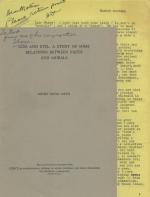
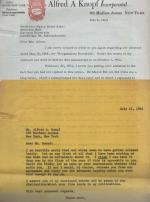
Typed letter, signed by German-born, American Jewish philosopher Hans Jonas, loosely inserted in Henry David Aiken’s pamphlet “God and Evil: A Study of Some Relations Between Faith and Morals”. The Essay by Aiken is inscribed and signed by Aiken in a sarcastic manner: “To God, from one of his congregation – Shem”. In the letter, Jonas reflects on two pages on an evening with Henry David Aiken and his then wife Lillian Woodworth. In his letter to Aiken, Hans Jonas reports back to Aiken after reading his essay [″God and Evil”] and calls it “a beautiful piece of work – in style and content worthy of your “master” who wrote on natural theology….”. Jonas goes on encouraging Aiken: “you are also dead wrong n not publishing a collection of your essays in ethical theory. If your pal Quine can do it “from a logical point of you [sic]”, so can you “from a moral point of view”. Jonas also mentions “that it is worth writing about the ancient problem opf a theodicy in a contemporary context”. [The Essay is n Offprint from Ethics, An International Journal of Social, Political and Legal Philosophy, Volume LXVIII, No. 2].

New York / Washington, DC, 1958. 16,8 x 24 cm. 21 pages (pages 77-97 of the Journal) plus two page-letter (on one leaf), signed by Hans Jonas Original Offprint / Original TLS (Typed letter signed). Very good+ condition. Stapled. Only minimal signs of staining. The letter also discusses a Reference for one “Ed Sayles” and Jonas suggest that Aiken writes “casual but fairly strong” to Howard R. Bartlett, professor of history and head of the Department of Humanities at MIT.

Show details

Typed Letter signed from american philosopher John Wild to Philosopher Henry David Aiken

41. [Maluf, Brother Francis] Wild, John / Aiken, Henry D.

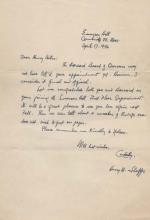
Typed Letter signed from american philosopher John Wild to Philosopher Henry David Aiken, informing Aiken: “I missed you especially two weeks ago when I attempted to defend a realistic view of ethics in terms of the concept of natural law. I am not sure, but I think you might have been in agreement with some of the points I tried to make as over against Lewis’ Kantian subjectivism and Demos’ [Raphael Demos] extreme Platonism….”. Besides some further niceties, John Wild talks in this letter intensely about Christian Arab Philosopher Francis Maluf, from Mashrah, Lebanon, who could be in John Wild’s mind the perfect “section man for your Phil A course”. Wild continues to praise the syrian, Maluf, who had been “teaching Mathematics and Physics in a war job out of Worcester and who has been keeping up his interest in philosophy by attenting courses around here, organizing discussion groups and other intellectual activities which amaze me by their versatility and intensity”. John Wild continues: “He has been offered a permanent job at the University of Beirut in Syria to teach Philosophy there (he is a friend of Malik’s) but if possible wants to stay around here for another year to study and learn before he goes back.” [Maluf had converted to catholicism in 1940 and was later known as Brother Francis Maluf.

Cambridge, April 15th, 1945. Octavo. 2 pages. Softcover. Very good condition with only minor signs of wear. Original two-page-letter with original envelope.

Show details

Page: 1 2 3 4 5
: