Signed (336 items)

Taylor, Collection of six (6) items/original, vintage and personal materials

3. Taylor, Tom / [Abraham Lincoln].

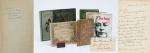
Exquisite collection of six (6) items/original, vintage and personal materials by/of Tom Taylor. The collection includes a 2 1/2 page, signed manuscript letter [MLS] by Tom Taylor to an unknown recipient , discussing a memorial he sent to Robert Browning’s patron, John Kenyon and mentioning former Prime Minister Lord Aberdeen [George Hamilton-Gordon, 4th Earl of Aberdeen]. The collection also includes two vintage 19th century cabinet photographs [Carte de Visite’s] of Tom Taylor, a later edition of Ballads and Songs of Brittany and two beautifully inscribed and signed presentation copies of his major works: 1. The first edition of Ballads of Brittany – London/Cambridge, MacMillan and Co.,1865 with many illustrations by Tissot, Tenniel etc. (This first edition is signed and inscribed by Tom Taylor to Emilia Ventana at Xmas 1864, before the publication of the book commenced) and 2. Tom Taylor’s Historical Dramas. London, Chatto & Windus, 1877. Signed and inscribed by Tom Taylor to Marie de Beauvoisier in March 1879.

London / Cambridge etc., Chatto & Windus / Routledge & Sons / etc., c. 1850-1879. Octavo. Ballads and Songs of Brittany (1865 edition): Frontispice, XXII, 239 pages / Ballads and Songs of Brittany (Later Routledge edition): XVI, 176 pages / Tom Taylor’s Historical Dramas: VIII, 466, 32 pages. / Manuscript Letter: 2 1/2 pages. Original Hardcover / The manuscript letter in a Folder, it includes an A4 manuscript leaf from a 19th century autograph-collector describing the letter by Taylor. / The two vintage cabinet photographs of Taylor included in the Folder with the autograph. Very good condition with only minor signs of external wear.

EUR 1.480,-- 

Show details   Add to cart

Richardson, Song and Speech.

11. Richardson, Josiah (Editor) / [J.F. Lloyd – Photographer – Carmarthen / J.C.Portnell – Carmarthen].

Song and Speech. [Unique collection of the short-lived “Song and Speech” – Magazine, edited by Josiah Richardson in 1891 and accompanied by an autograph / manuscript letter-signed by Richardson].

Two Volumes in One (14 Issues in Total). Strand / London, “Song and Speech”, 1891-1892. 18 cm x 24 cm. Volume 1: No.1-12, 192 pages / Followed by parts of Volume 2: No.13 – No.1: 16 pages, No.13 – No.2: 16 pages. With numerous black-and-white illustrations and photographs throughout. [The pagination of this periodical changed from original 16 pages per number at the beginning of Volume I, to 8 pages towards the end of the first Volume. With the start of Volume II , in 1892, the periodical changed again to 8 pages per issue and also changed its numbering. We were not able to verify if this magazine was published beyond the May – Issue of 1892]. Hardcover / Private, decoratived half-leather with gilt lettering and ornament on spine. Very good condition with only minor signs of external wear. With the very interesting provenance of two Welsh men of Carmarthen: Victorian photographer J.F.Lloyd and J.C.Portnell. Bound by: ‘The “Welshman” Newspaper and Steam Printing Co. Lt., Bookbinders, Machine Rulers, & c., Carmarthen’ – with their bookbindery-label on pastedown. Includes manuscript-draft of a speech on endpaper titled ‘John Jones Chairman’, written by photographer J.F.Lloyd, Carmarthen. The calligraphed titlepage of this privately bound compilation shows the watermark ‘Annandale Polton’, of ‘Annandale and Polton Paper Mill Company’, which operated from 1825 until after the Second World War. Contains hand-written note on Page 1, dated January 29, 1896, signed by Editor Josiah Richardson’. This note also contains the blindstamped address of Josiah Richardson at ‘Gordon House, Wandsworth Common, S.W.’. In this note, Richardson telles the recipient that “I hope soon to go on with the publication of my Journal & should then be pleased to number you among my subscribers – Faithfully your Josiah Richardson”. The date of this note leads to the assumption that by 1896, the magazine had already ceased to exist and Richardson answers to one of his fans by expressing his hope to go on. The Volume also includes a manuscript – Index to the rear of the Volume. A very rare and uncommmon compilation of this early Magazine, with very interesting articles from “Pronounciation in Singing” to “Alteration of Music by Singers” to “Vocal Physiology” (Breathing / Principle of Breathing etc.), to “Stammering” etc.

EUR 475,-- 

Show details   Add to cart

Vere Foster, "Presentation Copy of "The Two Duchesses" with Autograph / Manuscript-Letter

17. Foster, Vere [Henry Louis / Lewis] / [Emily Albinia “Alba” Foster] / [Georgiana Duchess of Devonshire / Elizabeth, Duchess of Devonshire].

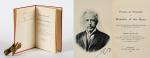
Amazing Vere Foster-Collection including Educational Materials and as a centerpiece the “Presentation Copy of “The Two Duchesses” with Autograph / Manuscript – Letter by Vere Foster to his niece, Emily Albinia “Alba” Foster. With a stunning, unpublished, two-page-letter, revealing several important details about the immediately favorable reviews and reception of the book [″in the Daily Telegraph”] and Vere Foster’s disdain about some criticism from one J.Donohue [which led to an alteration in the second edition of the book]. Vere Foster is also expecting a review to appear in the “Athenaeum” but reports “the Athenaeum has nothing yet”. Vere Foster apologizes to his niece for the delay in sending the book and explains that he had left 12 “parcels″£ with Blackie’s agent and gave instructions to send them but a few days later found they had been “untouched”. / The Two Duchesses – Georgiana, Duchess of Devonshire / Elizabeth, Duchess of Devonshire – Family Correspondence of and Relating to Georgiana, Duchess of Devonshire / Elizabeth, Duchess of Devonshire, Earl of Bristol (Bishop of Derby), The Countess of Bristol, Lord and Lady Byron, The Earl of Aberdeen, Sir Augustus Foster Bart, and Others, 1777-1859. [See Full list of items which are part of this collection, on our website under the topic “Libraries & Collections”].

First Edition. London / Glasgow and Dublin, Blackie & Son Limited, 1898. Octavo (15 cm x 22 cm). Pagination: Frontispiece, IX, [3], 497 pages with 18 Illustrations (including frontispiece and one Vignette of the two Duchesses opposite page 1). Hardcover / Original, publisher’s green cloth with gilt lettering on spine. Very good condition with some minor signs of wear only. This is an astonishing find for the Vere Foster Research Community and the letter gives significant insight into the importance the publication had for him, its reception as seen by Vere Foster and it solves the riddle why an altertaion was necessary for the second edition [which Vere Foster explains in a brief note to the reader at the beginning of the second edition]. The heartfelt inscription to his niece Albinia Foster is also of great importance and to our knowledge the only presentation-copy of this book on the international market for the several decades we can look back at auction records.

EUR 4.800,-- 

Show details   Add to cart

Vere Foster, The Two Duchesses - Presentation copy with important manuscript letter [signed and inscribed]

18. Foster, Vere [Henry Louis / Lewis] / [Georgiana Duchess of Devonshire / Elizabeth, Duchess of Devonshire].

The Two Duchesses – Georgiana, Duchess of Devonshire / Elizabeth, Duchess of Devonshire – Family Correspondence of and Relating to Georgiana, Duchess of Devonshire / Elizabeth, Duchess of Devonshire, Earl of Bristol (Bishop of Derby), The Countess of Bristol, Lord and Lady Byron, The Earl of Aberdeen, Sir Augustus Foster Bart, and Others, 1777-1859. First Edition. With 17 illustrations.

London / Glasgow and Dublin, Blackie & Son Limited, 1898. Octavo (16 cm x 22,5 cm). XII, 497 pages with 16 full-page-illustrations and one small vignette, showing the Two Duchesses in cordial embrace. Hardcover / Original, green publisher’s cloth with gilt lettering and ornament to spine and armorial supralibro to cover with the Motto of the “British chivalric Order of the Garter”: “Honi soit qui mal y pense” [″shame on anyone who thinks evil of it”]. Very good condition with some minor signs of wear only. “Presentation Copy of “The Two Duchesses” with Autograph / Manuscript – Letter by Vere Foster to his niece, Emily Albinia “Alba” Foster. With a stunning, unpublished, two-page manuscript letter, revealing several important details about the immediately favorable reviews and reception of the book “Two Duchesses” [″in the Daily Telegraph”] and Vere Foster’s disdain about some criticism from one J.Donohue [which led to an alteration in the second edition of the book]. Vere Foster is also expecting a review to appear in the “Athenaeum” but reports: “the Athenaeum has nothing yet”. Vere Foster apologizes to his niece for the delay in sending the book and explains that he had left 12 “parcels” with Blackie’s agent and gave instructions to send them, but a few days later found they had been “untouched”. One of the most important finds of Vere Foster – Material in recent years with no sign of similar material on offer in the past years on the international market.

Show details

Vaihinger, Sammlung bedeutender Ausgaben des Philosophen Hans Vaihinger

24. Vaihinger, Hans / Bode, Wilhelm / Vlach, Milo.

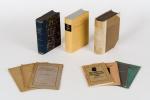
Sammlung bedeutender Ausgaben des Philosophen Hans Vaihinger mit signierten Widmungsexemplaren an den Wiener Philosophen und Vaihinger-Spezialisten Milo Vlach, Kunsthistoriker Wilhelm Bode, signierte Sonderdrucke, ein signierter Brief / (mit zwei Dubletten). Die Sammlung enthält die erste und dritte Auflage seines Hauptwerks sowie einen Neudruck der 9./10. Auflage von 1927: 1. Die Philosophie des Als Ob. System der theoretischen, praktischen und religiösen Fiktionen der Menschheit auf Grund eines idealistischen Positivismus. Mit einem Anhang über Kant und Nietzsche. Erste Ausgabe. XXXV,804 Seiten. Berlin, 1911. Blaues Halbleinen. / 2. Die Philosophie des Als Ob. Dritte, durchgesehene Auflage. XXXIX, 804 Seiten. Leipzig, Felix Meiner, 1918. Dekoratives Halbpergament / 3. Die Philosophie des Als Ob. Neudruck der 9./10. Auflage, 1927 (1986 Scientia). Gelbes Leinen. / 4. Der Atheismusstreit gegn die Philosophie des Als Ob und das Kantische System. Berlin, 1916. Widmung: “Überreicht vom Verfasser” / 5. Der Atheismusstreit gegn die Philosophie des Als Ob und das Kantische System. Berlin, 1916. Signiert: “Primum vivere deinde philosophari – Halle, d. 1.Juli 1921 – Vaihinger” / 6. Pessimismus und Optimismus vom Kantschen Standpunkt aus. Berlin, 1924. Widmung: “Überreicht vom Verfasser” / 7. Wie Kant beinahe geheiratet hätte – Kulturhistorische Novelle von August Stricker. Mit einem Vorwort neu herausgegeben von Hans Vaihinger. Leipzig, 1924. Widmung: “Herrn Dr.Milo Vlach in Wien mit den herzlichsten Grüssen – Halle a/S. im Jan.25 – Vaihinger” / 8. Nietzsche als Philosoph. Feldausgabe. Berlin, 1916 – Widmung: “Herrn Doktorand Miloslav Vlach in Wien mit freundlichem Gruss von H. Vaihinger” / 9. Ist die Philosophie des Als Ob Skeptizismus ? – Widmung: “Freundlichen Gruss, heute, am 100.Geburtstag von Friedrich Albert Lange, dem Vorkämpfer religiöser Selbstbehauptung – Halle, 28.IX.28 – Vaihinger” / 10. Ist die Philosophie des Als Ob Skeptizismus ? – Widmung: “Überreicht vom Verfasser” / 11. Wie die Philosophie des Als Ob entstand. Leipzig, Felix Meiner, 1921. Widmung: “Herrn Dr.Wilhelm Bode in Weimar, dem echten Vertreter der Lebenskunst Goethes, des Vorkämpfers für die ästhetische Illusionstheorie und für den religiösen Symbolismus. Zum 30. März 1922 – Vaihinger” / 12. Nietzsche als Philosoph. Langensalza, 1930. Widmung: “Herrn und Frau Obersekretär Barkhaus mit herzlichen Weihnachtswünschen, überreicht von H. Vaihinger – Halle a/S. im Dezember 1930.” / 13. Zweiseitiger Brief (Schreibmaschine) auf Vaihingers persönlichem Briefpapier, datiert Hale, 16.Dezember 1925. An einen “Herrn Stifts-Repetent Kraus” [Repetent an Vaihingers alter Schule – dem Evangelischen Stift in Tübingen.] Kraus hatte wohl eine philosophische Arbeitsgruppe von sieben Schülern und Vaihinger’s “Philosophie des Als Ob” muss Gegenstand der Arbeitsgruppe gewesen sein und Kraus hat aus diesem Grund mit Vaihinger kontakt aufgenommen. In der ausführlichen Art Vaihingers erwähnt dieser in seiner Antwort an Kraus den Einfluss von Otto Ritschl auf die Entstehung der “Philosophie des Als Ob”, er erwähnt auch Wobbermin in Göttingen und schreibt weiterhin: “als ehemaliger Stiftler betrachte ich es als eine Ehre, wenn im Stifte auch die “Philosophie des Als Ob” dadurch Anerkennung findet, dass man sich dort mit den von mir aufgeworfenen Theorien beschäftigt”.

Leipzig / Berlin / Halle etc., 1911 – 1930. Octavo. c. 2000 Seiten. Hardcover / Softcover. Die Sammlung generell in sehr gutem Zustand mit diesen Ausnahmen: Kleiner Wasserschaden an “Ist die Philosophie des Als Ob Skeptizismus ?” und “Pessimismus und Optimismus”. Eine Ausgabe des “Atheismusstreits” Papier etwas brüchig. / Anstreichungen und Anmerkungen in der Erstausgabe der “Philosophie des Als Ob”. Vorsatzblatt der Halbpergamentausgabe fehlt. Eine seltene Sammlung !!

EUR 1.800,-- 

Show details   Add to cart

Franz Rosenzweig - Der Stern der Erlösung [Hand-Exemplar des Walter Benjamin-Freundes Florens Christian Rang].

30. [Walter Benjamin Collection] – [Rang, Florens Christian / Benjamin, Walter] Rosenzweig, Franz.

Der Stern der Erlösung [Personal copy of Walter Benjamin’s friend “Florens Christian Rang” / Persönliches Exemplar aus der Bibliothek des Walter Benjamin-Freundes “Florens Christian Rang”. Voll signiert von Rang auf dem Titelblatt. Besitzvermerk von Florens Christian Rang in Tinte. Mit sehr interessanten Text-Markierungen in Buntstift und Bleistift, sowie zwei Annotationen zu Text-Verweisen im hinteren Einbanddeckel [hier kann nicht einwandfrei gesagt werden ob alle Anstreichungen von Rang sind da es zwei Formen von Anstreichungen gibt / Rang selbst hat nachweislich auch mit Buntstift markiert]. Die Handschrift mit dem Textverweis im Innendeckel deckt sich nicht mit online verfuegbaren Schriftproben Rang’s (siehe Abbildungen auf der Webseite des Florens Christian Rang Archivs)]. Bedeutender Fund für die Florens Christian Rang-Forschung da Walter Benjamin beide, Franz Rosenzweig und Florens Christian Rang, in seinem Essay, “Privilegiertes Denken – Zu Theodor Haeckers Vergil”, in einem Atemzug als bedeutende Kämpfer “gegen die Idolatrie des Geistes” nennt. Leider wird Benjamin’s Erwähnung von Rosenzweig und Rang oft nur verkürzt zitiert obwohl Benjamin in seinem Essay [1932] zu Haecker’s Vergil-Polemik noch einen Schritt weitergeht und die Bedeutung von entschärfenden, informierten und kompetenten Stimmen wie Rosenzweig und Rang hervorhebt. Benjamin schreibt in der wichtigen Passage: “Es ist nicht unsere Schuld, wenn der Verfasser [Haecker] das realpolitische Äquivalent seiner »Idee des Men­schen« in so peinliche Nähe rückt: jenes, im drastischen Sinne privilegierte, Verständnis der nichtabendländischen Völker, welches gekennzeichnet ist durch das Ineinanderwirken von Ausbeutung und Mission. So pflegt nun einmal die Kontrebande auszuschauen, die in das Musselin des reinen Geistes gewickelt, die Reisenden nach Wolkenkuckucksheim mit sich führen. Am allerwenigsten sollte die Theologie ein solches Wolkenkuckucksheim sein. Es sind denn auch in der Tat theologische Denker gewesen, die gerade in unserer Generation erschienen, um den Kampf gegen die Idolatrie des Geistes aufzunehmen: der Jude Franz Rosenzweig von der Sprache, der Protestant Florens Christian Rang von der Politik her. Nun hält allerdings auch Haecker sich für einen Sprachdenker so gut wie er ein Politiker ist, wennschon er vielleicht vorzieht, nicht dafür zu gelten. Aber das eben schließt ihn aus der Reihe der echten theologischen Denker aus, daß er die Philosophie der Sprache wie der Politik vom Geiste aus handhaben zu können meint, ohne weder mit der Philologie noch mit der Ökonomie näher sich einzulassen. Freilich – und so erst rückt der Sachverhalt ins rechte Licht – bei Rosenzweig und vollends bei Rang handelt es sich um häretisch gestimmte Männer, denen es nichts Unmögliches ist, die Tradition auf ihrem eigenen Rücken zu befördern, statt sie seßhaft zu verwalten.″ Die zahlreichen und sehr aufschlussreichen Anstreichungen in Rosenzweig’s Werk, bestätigen Benjamin’s Auffassung, da Sie uns erlauben Rang’s Transformierung vom Nationalisten zum politisch moderat eingestellten Konservativen, teilweise nachvollziehen zu können. Die Publikation Rosenzweigs fällt ausserdem in die kritische Phase von Rang’s Wandlung. Die “Deutsche Bauhütte”, Rang’s publizistisches Testament seiner Entfernung vom Nationalismus, erschien nur drei Jahre später. Die vorliegende Ausgabe ist eindrucksvoller Nachweis für die immer neue Bereitschaft Rangs zur völligen Aufgabe seiner Ideale und zur Offenheit gegenüber einem philosophischen und politischen Erweckungserlebnisses, begonnen mit der Abkehr vom Christentum und vollzogen mit der Lektüre des Magnum Opus eines jüdischen Philosophen dessen Werk er mit seinem Besitzeintrag für sich ganz privat legitimiert. Zum Zeitpunkt der Lektüre von Rosenzweig’s “Stern der Erlösung”, hatte Rang bereits durch Mitarbeit im Forte-Kreis seine wilhelminischen “Phantasmagorien einer preussischen Religion” [Christine Holste – “Der Forte-Kreis 910 – 1915”] abgelegt und war durch solch disperaten Kontakte wie zu Martin Buber und Gustav Landauer ein Kandidat für eben jene Evolution die Benjamin in ihm spüren musste. Benjamin, der Rang nicht nur persönlich kannte sondern ihn auch “erkannte”, schrieb an Scholem, dass er „seltsamerweise […] diesem Mann, ebenso wie seine Unterstützung und Bestätigung, das zu danken vermochte und danken mußte, was ich von deutscher Bildung Wesentlichstes in mich aufgenommen habe. Denn nicht nur, daß in diesem Bereiche die Hauptgegenstände unserer beharrlichen Betrachtung fast sämtlich dieselben waren – das Leben, das in diesen großen Gegenständen lebt, habe ich menschlich ganz allein in ihm lebendig gesehen, ausbrechend mit desto mehr vulkanischer Gewaltsamkeit, als es unter der Kruste des übrigen Deutschland erstarrt lag. Wenn ich mit ihm sprach, war nicht sowohl Harmonie in unsern Gedanken, als daß ich, wetterfest und athletisch, an dem unmöglichen, zerrissenen Massiv der seinigen mich versuchte und oft genug eine Zinne mit weitem Ausblick auf eigne unerschlossne Gedankenbereiche gewann. Sein Geist war von Wahnsinn durchzogen wie ein Massiv von Schluchten. Aber durch die Moralität dieses Mannes gewann Wahnsinn keine Macht über ihn.” / Of utmost interest for the evaluation of Rang’s development from nationalist to empathetic centrist. Benjamin famously mentions both, Florens Christian Rang and Franz Rosenzweig as equally important influences for his Generation in “fighting the Idolatry of the Spirit/Mind”. This makes Rang’s personal copy of Rosenzweig’s masterpiece an enormously interesting find; possibly even a key to Rang’s ideological and religious transformation].

Erste Ausgabe. Frankfurt am Main, J.Kauffmann Verlag, 1921. Oktav (16 cm x 22,5 cm). 532, [2] Seiten. Hardcover / Originaler Verlagseinband mit illustriertem und beschriftetem Einbanddeckel. Die seltene Publikation, aus der Bibliothek von Florens Christian Rang, wurde mit einem neuen Einbandrücken versehen und das originale Rückenschildchen wurde neu aufgezogen. Die Bindung ist firm, die originalen Vorsatzblätter wurden erhalten. Das sonst notorisch schlecht erhaltene Papier der Publikation, hier generell in aussergewöhnlich guter Erhaltung; allerdings mit einigen kleineren Schäden: Kleine Einrisse ohne Textverlust auf den Seiten 7-8 / Sehr feine Einrisse ohne Textverlust auf den Seiten 207 – 210 / Unschöne Ausrisse mit nur geringem Textverlust am Rand der Seiten 409 – 414.


Show details

[Tey, Josephine Tey - John Gielgud Collection of stunning Association copies

47. [Tey, Josephine / Daviot, Gordon] / [Gielgud, John].

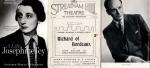
Josephine Tey – John Gielgud Collection of stunning Association copies of Plays which crucially defined both of their careers as writers and actors. The collection includes important, signed and inscribed association – copies of the two significant productions “Richard of Bordeaux” and “Queen of Scots”, both from John Gielgud’s personal library and with manuscript inscriptions to John Gielgud [and Laurence [Larry] Olivier] by Josephine Tey, aka Gordon Daviot, aka Elizabeth MacKintosh. The collection includes: 1. Gordon Daviot [Josephine Tey] – “Richard of Bordeaux – A Play in Two Acts” – With John Gielgud’s Bookplate (Ex Libris). The ultimate Association-copy, warmly and lengthy inscribed by Josephine Tey to John Gielgud. First Edition. London, Victor Gollancz, 1933 / 2. “Richard of Bordeaux” – Original Programme of “The Streatham Hill Theatre”, 1934. Signed by John Gielgud / 3. Gordon Daviot [Josephine Tey] – “Richard of Bordeaux” – Original File-copy with dustjacket and Publisher’s wrapper “The Play of the Year” at the New Theatre” – First Edition, 1933 / 4. Gordon Daviot [Josephine Tey] Gordon Daviot – “Richard of Bordeaux – A Play in Two Acts” – [Fifth Edition, 1933] – Special Cast, Producer and Production-Signed copy and inscribed to one “Eileen Grainger”, with the most interesting dedications in manuscript signatures – Signed and inscribed by lead actor and producer John Gielgud [Richard II], Signed and inscribed by leading Lady, actress Gwen Ffrangcon-Davies, Signed and inscribed by Gordon Daviot [Josephine Tey], Also beautifully signed and inscribed with a musical score by Shakespeare-composer and Musical Director for John Gielgud, Herbert Menges OBE ! / 5. “Queen of Scots – A Play in Three Acts” – The Ultimate Association-copy, inscribed by Josephine Tey to her producer: “John Gielgud – from ‘his Gordon Daviot’ / July 1934” / 6. Gordon Daviot – “Queen of Scots – A Play in Three Acts” – Association-copy, signed and warmly and lengthy inscribed by Josephine Tey to Laurence Olivier / 7. Gordon Daviot [Josephine Tey] – “Richard of Bordeaux” – A Softcover-Version of the Play in Fourth Impression, 1933 / 8. Josephine Tey – “The Daughter of Time” – First Edition, Second Impression (Second Printing). London, Peter Davies, July 1951 [The First Edition was in June 1951]. Original Hardcover with the slightly frayed original dustjacket in Mylar / 9. John Gielgud – “Early Stages” – New and Revised Edition. London, The Falcon Press, 1948. With pages of detail about the work of John Gielgud with Gordon Daviot [Josephine Tey] / 10. Jennifer Morag Henderson – “Josephine Tey – A Life” – With a Foreword by Val McDermid. Sandstone Press, 2015 //

London, Victor Gollancz, 1933 – 1948. Octavo. Hardcover / Original Publisher’s cloth. Very good condition with only minor signs of wear.

EUR 12.800,-- 

Show details   Add to cart

Provenance: From the personal library of Adrian Liddell Hart / Collection of 28 Volumes of John Lehmann's "New Writing", some bearing the name of Adrian Liddell Hart

58. [Lehmann, John] / [Liddell Hart, Adrian] / [Harold Acton] / [Manuscript Postcards from Lehmann to Liddell Hart].

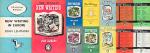
Provenance: From the personal library of Adrian Liddell Hart / Collection of three personal autograph/manuscript-postcards from John Lehmann to Adrian Liddell Hart, together with 28 Volumes of John Lehmann’s “New Writing”, some bearing the name of Adrian Liddell Hart, including Volume I (includes George Orwell’s “Shooting an Elephant” in second edition). Besides the 28 Volumes of Lehmann’s “New Writing”, the collection also includes: 1. John Lehmann’s personal copy of Sean O’Faolain’s “Vive Moi!” – An Autobiography (First Edition, London, Rupert Hart-Davies, 1965), with John Lehmann’s name on the front free endpaper and some markings in the text. / 2. John Lehmann – Pleasures of New Writing – An Anthology of Poems, Stories and other Prose Pieces from the pages of NEW WRITING. Edited by John Lehmann. (First Edition, London, John Lehmann, 1952). [Even though this Volume is also from Liddell Hart’s library, it bears a different name of a pre-owner on the half-title].

Mixed Editions. 30 Volumes. London, John Lehmann / Allen Lane – Penguin Books / Rupert Hart-Davis, 1940-1965. Octavo. [The Postcards written from Venice, Florence and Santa Barbarabetween the years 1952 and 1977 / Postcard I: From John Lehmann in Venice to Adrian Liddell Hart: “This city does not boast a supply of the “Sunday Dispatch”, and as the writer was gripped and enthralled by the last installment on June 1st, he hopes you will keep copies of the …for him to read on his return in ten Days time – J.” / Postcard II: From John Lehmann in Florence to Adrian Liddell Hart: “Am staying with [Sir] Harold Acton here in his marvellous Villa – calme luxe [″Villa La Pietra”], all night……pity, you aren’t with me. Off to the sea this afternoon – may post this in Porto Ercole. Your old friend is relaxing. Gracefully – Love J.” [Date hard to decipher, possibly in 1962] / 3. Postcard III: From John Lehmann in Santa Barbara in California to Adrian Liddell Hart: “Terribly sorry to hear about the broken leg, may it mend quickly, as surely it must undo the ministrations of Florence …..Nightingale. I expect to be in England all March, but then off again – to Jimmy Carter Country – Love J.” [20.2.77]. Hardcover and Softcover. Of the series of 28 Volumes of the “New Writing ″ Series, only three with stronger signs of wear and in poorer condition. All others in very good condition with only minor signs of wear. Lehmann’s personal copy of Sean O’Faolain’s Autobiography with the original dustjacket in poor condition but the Volume itself very good.

EUR 1.480,-- 

Show details   Add to cart

Pages from a Diary Written in Nineteen Hundred and Thirty. [Signed / Inscribed by George Yeats

65. Yeats, William Butler / [George [Georgie] Yeats / Mrs. Eva Hempel / Eduard Hempel].

Pages from a Diary Written in Nineteen Hundred and Thirty. [Signed / Inscribed by George Yeats to Mrs. [Eva] Hempel, wife of german ambassador to Ireland during World War II].

No.8 / 200 copies, of the original limited edition. Dublin, The Cuala Press, 1944 [September 1944]. Octavo. 58 pages. Original Hardcover. Inscribed by George Yeats on the front free endpaper: “Mrs. Hempel from George Yeats, April 1944”. This has to be of course “April 1945”. The impossibility of signing/inscribing a book in April 1944 if it was only published in September 1944 is easily explained with the classic everyday-mistake of still writing the previous year in the first few months of the following year. A stunning association. The signature and inscription is a solid match to George Yeats’ autographs in her later hand and William Butler Yeats and George Yeats were frequent visitors to the Hempel’s in Dublin. In addition, the low number of the edition (8/200) suggests this being one of the reference copies given to George Yeats, who contributed heavily to the volume and even added an explanatory note (in print) verso the titlepage. This copy is near fine, bound in the publisher’s quarter buckram over yellow, paper-covered boards. The books pages remained unopened. Eva Hempel’s husband Eduard Hempel is one of the most controversial figures in modern Irish history, excoriated by some as ‘Hitler’s man’, defended by others such as the country’s first President, Eamon De Valera. Certainly, Hempel presented William Butler Yeats in 1938 with a copy of ‘Germany Speaks’ whose inscription described an ‘unforgettable afternoon’ spent together by Yeats and Hempel. Eduard Hempel and his wife were accepted socialites in the Dublin world of World War II, famously receiving a condolence call by de Valera upon the death of Hitler. Eduard Hempel and his wife Eva were granted asylum in Ireland after world war II and stayed way beyond the end of World War II.

EUR 380,-- 

Show details   Add to cart

Adorno / Horkheimer / Haag - Wichtige Sammlung von bedeutenden Arbeitsexexemplaren / Widmungsexemplaren / Autorenexemplaren der Frankfurter Schule

87. [Adorno, Theodor W. / Horkheimer, Max / Benjamin, Walter] Haag, Karl-Heinz / Schweppenhäuser, Prof. Dr. Hermann.

Wichtige Frankfurter Schule-Sammlung von sehr bedeutenden Arbeitsexemplaren / Widmungsexemplaren / Autorenexemplaren, Autographen und Manuskript-Notiz-Zetteln des deutschen Philosophen Karl-Heinz Haag. Die Arbeitsexemplare (Sieben Buchtitel in neun (9) Bänden) und handschriftlichen Notizen und Autographen (Postkarten), stammen aus der privaten Bibliothek des Adorno und Horkheimer- Schülers, Karl-Heinz Haag. Die in der Sammlung enthaltenen Manuskript-Notizen und Autographen (Postkarten von Horkheimer) sind inhaltsreich und teilweise auch deshalb sehr bedeutend, weil es unter Insidern bekannt ist, dass Haag auch während seiner aktiven Zeit innerhalb der Frankfurter Schule notorisch wenig veröffentlicht und schriftlich kommentiert hat. Beiliegt ausserdem ein Zeitungsausschnitt zur Adorno-Lehrstuhl-Nachfolge. / Important, stunning collection of seven, signed or/and annotated association-copies (working-copies) from the private library of german philosopher Karl-Heinz Haag. Haag was pupil, friend and colleague of Adorno and Horkheimer and was one of the members of the Frankfurt School of Social Theory and Social Research. The collection of annotated books (Seven Booktitles in nine (9) volumes) also includes ephemera (Autograph postcards, newspaper-clipping, as well as several manuscript – pages of significant notes and thoughts by Karl-Heinz Haag regarding topics discussed in some of these publications). The collection is especially important because Haag published and commented notoriously little during and after his tenure in Frankfurt. [See complete set of photographs of this collection on our website].

Frankfurt u.a., Suhrkamp / Institute of Social Research / Kohlhammer etc., 1955 – 1972. Octavo. Paginierung / Collation: 1. Adorno – Aspekte der Hegelschen Philosophie (Inscribed, signed): 59 Seiten mit zahlreichen Annotationen /59 pages, heavily annotated / 2. Haag – Kritik der neueren Ontologie (Author’s copy): 59 Seiten / 59 pages / 3. Adorno – Drei Studien zu Hegel (Inscribed, signed): 172 Seiten mit zahlreichen Annotationen / 172 pages with annotations / 4. Horkheimer – Zur Kritik der instrumentellen Vernunft (Inscribed, signed): 353 Seiten mit vielen Anmerkungen und Anstreichungen / 353 pages, heavily annotated / 5. Horkheimer – Kritische Theorie (Inscribed, signed): XIV, 376, XI, 358 Seiten mit zahlreichen Anmerkungen und Anstreichungen / XIV, 376, XI, 358 pages, heavily annotated / 6. Schweppenhäuser – Tractanda (Inscribed, signed): 141 Seiten / 141 pages. Original Softcover and Hardcover – Volumes. Sehr guter Erhaltungszustand aller Publikationen mit teilweise eingelegten, handschriftlichen Notizen sowie ein alter Zeitungsartikel in dem der Zersetzungsprozess der Frankfurter Schule kommentiert wird. / All publications in very good condition with minor signs of wear. Amazing provenance and possibly one of the last important collections surfacing from the library of a member of the Frankfurt School. The inter-connection between Adorno – Haag – Horkheimer, reflected in Haag’s annotations, lends itself for study and new publications of criticism.

EUR 3.800,-- 

Show details   Add to cart

Page: 1 2 3 4
: