Varia (8173 items)

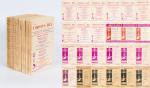
[WalterBenjamin] Willy Haas - Die literarische Welt.

7514. [Walter Benjamin Collection] – [Benjamin, Walter] Haas, Willy / [Stefan Zweig / Heinrich Mann / Thomas Mann / etc.].

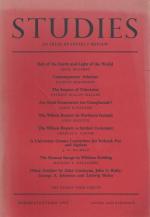
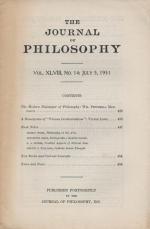
Die literarische Welt. [Mit zahlreichen Erstdrucken von Essays und Rezensionen von Walter Benjamin: “Die Technik des Schriftstellers in dreizehn Thesen” / Walter Benjamin – “Skandal im Théatre-Français” / Buch-Chronik der Woche von Walter Benjamin: “C.A.Bernoulli – Johann Jakob Bachofen und das Natursymbol” / Walter Benjamin – “J.P.Hebel – Ein Bilderrätsel zum 100.Todestag des Dichters” / Buch-Chronik der Woche von Walter Benjamin: “Franz Hessel” / Walter Benjamin – “Der Kaufmann im Dichter” / Walter Benjamin – “Aussicht ins Kinderbuch” (mit Abbildungen von Titeln aus der Sammlung Benjamin) / Walter Benjamin – “Noch ein Paar Neue Kinderreime” / Walter Benjamin – “Kinder” [I.Karussellfahrendes Kind / II. Zu Spaet gekommenes Kind / III. Verstecktes Kind”] / Titelseite als Kalenderblatt mit Karikatur-Portraits von Mitarbeitern der “Literarischen Welt”: u.a. Walter Benjamin, Walter Mehring, Willy Haas u.v.a. “Zum Neuen Jahr lasst Blumen sprechen” / “Wandkalender der “Literarischen Welt” fuer 1927 – Verse von Walter Benjamin / Zeichnungen von Rudolf Grossmann / Walter Benjamin – “Der Regisseur Meyerhold – In Moskau erledigt ?” – “Ein literarisches Gericht wegen der Inszenierung von Gogols ‘Revisor’” / Walter Benjamin – “Zur Lage der Russischen Filmkunst” / Walter Benjamin und Oscar A.H.Schmitz – “Eine Diskussion ueber russische Filmkunst und kollektivistische Kunst ueberhaupt” [Schmitz eroeffnet die Diskussion mit “Potemkinfilm und Tendenzkunst” – Walter Benjamin antwortet daraufhin dem “Bildungsphilister” Schmitz mit einer Polemik].

First Edition. Two Volumes with 94 Issues in total (31 issues in duplicate / 31 Hefte doppelt). Berlin, Ernst Rowohlt, 1925 – 1927. Folio. Pagninierung / Pagination of both Volumes: Volume I: The following 42 issues available in this collection are: 1. Jahrgang / Annual (1925): Nr. 2 und Nr. 4 / 2. Jahrgang (1926): Nr. 14, 19, Nr. 36 – Nr. 52 (17 Issues) / 3. Jahrgang / Annual (1927): Nr. 1-21 [Each issues with 8 pages with illustrations] / [Jedes Heft mit 8 Seiten incl. Abbildungen] / Volume II: 3. Complete Third Annual of 52 Issues for 1927): Kompletter 3. Jahrgang: Nummer 1-52. [Each issues with 8 pages with illustrations]. Illustrations in original woodcut-textillustrations are by Rudolf Großmann (several), Lili Réthi, B. F. Dolbin (several), Frans Masereel (several), George Grosz (Kinderzeichnungen), Renée Sintenis, Alfred Kubin, Max Beckmann, Man Ray and others. Hardcover (original title-wrappers inside a privately printed half-cloth binding) / Hardcover / Privater Halbleinenband der 20er Jahre. Small cutout to page 5 of Issue 2 (Advertising ? 8.4 x 14.5 cm) / (1 cm-tear to outer margin of all issues in Volume one – text not effected) / Titlepage of Issue 49, IInd Annual (1926), missing. Otherwise in very good condition with only minor signs of wear. While it would usually be desirable to have these issues in their original, unbound form, these two privately bound Volumes are actually a blessing and led to these issues to be preserved in unusually excellent condition. A Rare run of this peridocal, with a provenance of one “Frl. Nippoldt” (Miss Nippoldt), Weissenburgstr. 17 / Kleiner Ausschnitt auf Seite 5 der Nummer 2 von 1925 (Werbung) / (1 cm Einriss in den Rand der Nummern von Band 1 – Text nicht betroffen) / Titelblatt der Nummer 49 des II.Jahrgangs (1926) fehlt / Sonst sehr gut erhalten. Auch wenn eine ungebundene Broschur-Version dieser seltenen Zeitschrift einer Privatbindung normalerweise vorzuziehen ist, so ist in diesem Fall die Wahl der Bindung sehr gelungen und man ist fast dankbar wie gut die einzelnen Ausgaben dadurch erhalten wurden. Einige der Ausgaben haben einen alten Besitzvermerk: “Frl. Nippoldt” – “Weissenburgstr.17”, sowie gelegentliche, interessante Kommentare und Annotationen im Text (mit Bleistift)”.

Show details

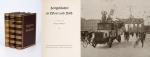
Franz Rosenzweig - Der Stern der Erlösung [Hand-Exemplar des Walter Benjamin-Freundes Florens Christian Rang].

7515. [Walter Benjamin Collection] – [Rang, Florens Christian / Benjamin, Walter] Rosenzweig, Franz.

Der Stern der Erlösung [Personal copy of Walter Benjamin’s friend “Florens Christian Rang” / Persönliches Exemplar aus der Bibliothek des Walter Benjamin-Freundes “Florens Christian Rang”. Voll signiert von Rang auf dem Titelblatt. Besitzvermerk von Florens Christian Rang in Tinte. Mit sehr interessanten Text-Markierungen in Buntstift und Bleistift, sowie zwei Annotationen zu Text-Verweisen im hinteren Einbanddeckel [hier kann nicht einwandfrei gesagt werden ob alle Anstreichungen von Rang sind da es zwei Formen von Anstreichungen gibt / Rang selbst hat nachweislich auch mit Buntstift markiert]. Die Handschrift mit dem Textverweis im Innendeckel deckt sich nicht mit online verfuegbaren Schriftproben Rang’s (siehe Abbildungen auf der Webseite des Florens Christian Rang Archivs)]. Bedeutender Fund für die Florens Christian Rang-Forschung da Walter Benjamin beide, Franz Rosenzweig und Florens Christian Rang, in seinem Essay, “Privilegiertes Denken – Zu Theodor Haeckers Vergil”, in einem Atemzug als bedeutende Kämpfer “gegen die Idolatrie des Geistes” nennt. Leider wird Benjamin’s Erwähnung von Rosenzweig und Rang oft nur verkürzt zitiert obwohl Benjamin in seinem Essay [1932] zu Haecker’s Vergil-Polemik noch einen Schritt weitergeht und die Bedeutung von entschärfenden, informierten und kompetenten Stimmen wie Rosenzweig und Rang hervorhebt. Benjamin schreibt in der wichtigen Passage: “Es ist nicht unsere Schuld, wenn der Verfasser [Haecker] das realpolitische Äquivalent seiner »Idee des Men­schen« in so peinliche Nähe rückt: jenes, im drastischen Sinne privilegierte, Verständnis der nichtabendländischen Völker, welches gekennzeichnet ist durch das Ineinanderwirken von Ausbeutung und Mission. So pflegt nun einmal die Kontrebande auszuschauen, die in das Musselin des reinen Geistes gewickelt, die Reisenden nach Wolkenkuckucksheim mit sich führen. Am allerwenigsten sollte die Theologie ein solches Wolkenkuckucksheim sein. Es sind denn auch in der Tat theologische Denker gewesen, die gerade in unserer Generation erschienen, um den Kampf gegen die Idolatrie des Geistes aufzunehmen: der Jude Franz Rosenzweig von der Sprache, der Protestant Florens Christian Rang von der Politik her. Nun hält allerdings auch Haecker sich für einen Sprachdenker so gut wie er ein Politiker ist, wennschon er vielleicht vorzieht, nicht dafür zu gelten. Aber das eben schließt ihn aus der Reihe der echten theologischen Denker aus, daß er die Philosophie der Sprache wie der Politik vom Geiste aus handhaben zu können meint, ohne weder mit der Philologie noch mit der Ökonomie näher sich einzulassen. Freilich – und so erst rückt der Sachverhalt ins rechte Licht – bei Rosenzweig und vollends bei Rang handelt es sich um häretisch gestimmte Männer, denen es nichts Unmögliches ist, die Tradition auf ihrem eigenen Rücken zu befördern, statt sie seßhaft zu verwalten.” Die zahlreichen und sehr aufschlussreichen Anstreichungen in Rosenzweig’s Werk, bestätigen Benjamin’s Auffassung, da Sie uns erlauben Rang’s Transformierung vom Nationalisten zum politisch moderat eingestellten Konservativen, teilweise nachvollziehen zu können. Die Publikation Rosenzweigs fällt ausserdem in die kritische Phase von Rang’s Wandlung. Die “Deutsche Bauhütte”, Rang’s publizistisches Testament seiner Entfernung vom Nationalismus, erschien nur drei Jahre später. Die vorliegende Ausgabe ist eindrucksvoller Nachweis für die immer neue Bereitschaft Rangs zur völligen Aufgabe seiner Ideale und zur Offenheit gegenüber einem philosophischen und politischen Erweckungserlebnisses, begonnen mit der Abkehr vom Christentum und vollzogen mit der Lektüre des Magnum Opus eines jüdischen Philosophen dessen Werk er mit seinem Besitzeintrag für sich ganz privat legitimiert. Zum Zeitpunkt der Lektüre von Rosenzweig’s “Stern der Erlösung”, hatte Rang bereits durch Mitarbeit im Forte-Kreis seine wilhelminischen “Phantasmagorien einer preussischen Religion” [Christine Holste – “Der Forte-Kreis 910 – 1915”] abgelegt und war durch solch disperaten Kontakte wie zu Martin Buber und Gustav Landauer ein Kandidat für eben jene Evolution die Benjamin in ihm spüren musste. Benjamin, der Rang nicht nur persönlich kannte sondern ihn auch “erkannte”, schrieb an Scholem, dass er „seltsamerweise […] diesem Mann, ebenso wie seine Unterstützung und Bestätigung, das zu danken vermochte und danken mußte, was ich von deutscher Bildung Wesentlichstes in mich aufgenommen habe. Denn nicht nur, daß in diesem Bereiche die Hauptgegenstände unserer beharrlichen Betrachtung fast sämtlich dieselben waren – das Leben, das in diesen großen Gegenständen lebt, habe ich menschlich ganz allein in ihm lebendig gesehen, ausbrechend mit desto mehr vulkanischer Gewaltsamkeit, als es unter der Kruste des übrigen Deutschland erstarrt lag. Wenn ich mit ihm sprach, war nicht sowohl Harmonie in unsern Gedanken, als daß ich, wetterfest und athletisch, an dem unmöglichen, zerrissenen Massiv der seinigen mich versuchte und oft genug eine Zinne mit weitem Ausblick auf eigne unerschlossne Gedankenbereiche gewann. Sein Geist war von Wahnsinn durchzogen wie ein Massiv von Schluchten. Aber durch die Moralität dieses Mannes gewann Wahnsinn keine Macht über ihn.” / Of utmost interest for the evaluation of Rang’s development from nationalist to empathetic centrist. Benjamin famously mentions both, Florens Christian Rang and Franz Rosenzweig as equally important influences for his Generation in “fighting the Idolatry of the Spirit/Mind”. This makes Rang’s personal copy of Rosenzweig’s masterpiece an enormously interesting find; possibly even a key to Rang’s ideological and religious transformation].

Erste Ausgabe. Frankfurt am Main, J.Kauffmann Verlag, 1921. Oktav (16 cm x 22,5 cm). 532, [2] Seiten. Hardcover / Originaler Verlagseinband mit illustriertem und beschriftetem Einbanddeckel. Die seltene Publikation, aus der Bibliothek von Florens Christian Rang, wurde mit einem neuen Einbandrücken versehen und das originale Rückenschildchen wurde neu aufgezogen. Die Bindung ist firm, die originalen Vorsatzblätter wurden erhalten. Das sonst notorisch schlecht erhaltene Papier der Publikation, hier generell in aussergewöhnlich guter Erhaltung; allerdings mit einigen kleineren Schäden: Kleine Einrisse ohne Textverlust auf den Seiten 7-8 / Sehr feine Einrisse ohne Textverlust auf den Seiten 207 – 210 / Unschöne Ausrisse mit nur geringem Textverlust am Rand der Seiten 409 – 414.


Show details

[Middle East with Kuwait] Naylor, Collection of two (2) large boxes of materials regarding Kuwait, Iraq (near Basrah), Lebanon, Jordan (Halat Ammar and Al Mudawwara), Jordan in general, Arava Valley

7522. [David Naylor Geology & Petroleum Collection] – [Middle East Collection with Kuwait / Iran (Persia) / Yemen / Jordan] Naylor, David (Dave).

Collection of two (2) large boxes with rare and sometimes inscribed, Printed Materials and very rare Geological Surveys with Maps (for example it includes the very rare Geological Survey of Iran) from the private Reference- library of Geologist Prof. David (Dave) Naylor regarding Kuwait, Iraq (near Basrah), Lebanon, Jordan (Halat Ammar and Al Mudawwara), Jordan in general, Arava Valley (Dead Sea). See a full list of the contents below. These materials are all publications, sometimes official government papers or maps or academic publications from fellow geologists as well as for example official publications of talks given for OAPEC. All publications are revolving around the evaluation of Petroleum Deposits, Petroleum Geology and Stratigraphy or Hydrocarbon in the “Near and Middle East” – Maps and Charts and offprints, all of them rare publications and some only reprinted for private circulation. The focus of the publications ranges from very scientific-geological (″The Fauna of some Recent Marine Deposits near Basrah, Iraq”) to actual problems of prospecting (″Some Problems of Petroleum Geology in Kuwait”). These two boxes are only the Middle East Section of the David Naylor Collection (see all the Materials we own from the David Naylor-Reference library on our website). The collection also includes books related to the region (inquire for separate list).

Amman (Jordan) / Kuwait / Mexico / Potsdam, etc., c.1958 – 2011. Quarto. c. 1200 pages plus maps. Hardcover Boxes / Two bespoke made Boxes for the private reference library of Geologist David (Dave) Naylor. Very good condition with only minor signs of wear.

Show details

David Puttnam - Collection of original Film / Movie - Memorabilia, inscribed/signed books and the extensive Record Collection

7525. Puttnam, David.

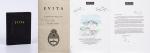
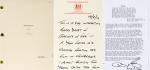
Collection of Film / Movie & Music – Memorabilia with rare, inscribed/signed books, photographs and promotional ephemera as well as related materials from the private library of Lord David Puttnam and few other sources. The collection includes a large amount of international publications and important monographs on the History of Film and Movies and also several signed and/or inscribed/dedicated Vinyl-Records by early friends of David Puttnam (Ringo Starr, Barbra Streisand etc.) together with some publications on Literature, History, Photography. Also included are several amazing association-copies from David Puttnam’s time as producer at Columbia Studios; like a signed and spectecularly inscribed book by important Director Spike Lee, Director and friend Alan Parker etc. etc. We list here a few items but the complete list of items, described in detail and photographed, will be visible over time on our website under “Libraries & Collections”. Among the titles are for example: 1. A xeroxed copy of the second draft of “Chariots of Fire”, which David Puttnam signed in 2019 and to which he added a wonderful manuscript note and story of the Script: “This is a very interesting early Draft of ‘Chariots of Fire’ – A year later we started shooting the film in Cambridge – Almost exactly two years later the film won the BAFTA Best Picture Award and a few weeks later The ‘Oscar’ ! – Colin Welland also won for Best Screenplay that same evening. Reading this you can see why. Regards – David Puttnam”/ 2. Collection of signed vintage Vinyl owned by Lord David Puttnam, signed and inscribed Records by famous artists and musicians like Barbra Streisand, Ringo Starr, Jean-Michel Jarre as well as soundtracks of his own films (included are Local Hero [not signed by Mark Knopfler but signed by David Puttnam], Midnight Express) etc. / 3. Amazing, absolutely wonderful association copy of Alan Parker’s “Cartoon Version” of his movie “Evita” with which he thanked his cast and crew. This being a personally inscribed copy from Alan Parker to his friends David & Patsy Puttnam. Accompanied by a two-page letter, signed by Parker and citing a quote of David Puttnam reflecting on his own experiences in the movie-business with a bit of ironic advice for his friend Alan Parker on how to exit the movie-business. / 4. Collection of books by writers befriended to David Puttnam, often signed and/or inscribed (Nick Hornby – Fever Pitch etc.) / 5. Collection of monographs and biographies on and by Actors, Directors, Film and Movie-MakingTechnique, Sociology of Film etc. etc. / 6. Large collection of photographical stills as well as portraits of Directors on set during the act of directing, etc. etc.

London / UK / USA, c.1968-1996. Octavo. Original Hardcover with the rare illustrated dustjacket in protective collector’s Mylar. Very good condition with only minor signs of external wear.

EUR 25.000,-- 

Show details   Add to cart

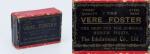
Vere Foster, Publisher's original "Private Library" - Correction-Copy of "The Two Duchesses"

7527. Foster, Vere [Henry Louis / Lewis] / [Georgiana Duchess of Devonshire / Elizabeth, Duchess of Devonshire] / [Publisher Blackie & Son – Publishing House in Glasgow].

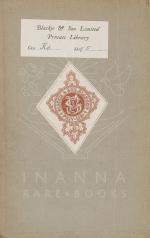
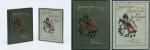
Publisher’s original “Private Library” – Correction-Copy of “The Two Duchesses”, for the “Second Edition”, with necessary alterations and wishes for changes marked by the corrector / publisher in pencil. Comparisons between pages allow to see the changes in effect if one compares the first and second edition. [A sensational find] / Georgiana, Duchess of Devonshire / Elizabeth, Duchess of Devonshire – Family Correspondence of and Relating to Georgiana, Duchess of Devonshire / Elizabeth, Duchess of Devonshire, Earl of Bristol (Bishop of Derby), The Countess of Bristol, Lord and Lady Byron, The Earl of Aberdeen, Sir Augustus Foster Bart, and Others, 1777-1859. First Edition. With 17 illustrations.

London / Glasgow and Dublin, Blackie & Son Limited, 1898. Octavo (16 cm x 22,5 cm). XII, 497 pages with 16 full-page-illustrations and one small vignette, showing the Two Duchesses in cordial embrace. Hardcover / Original, green publisher’s cloth with gilt lettering and ornament to spine and armorial supralibro to cover with the Motto of the “British chivalric Order of the Garter”: “Honi soit qui mal y pense” [″shame on anyone who thinks evil of it”]. Excellent, very clean binding. Very good condition with some minor signs of wear only. “Publisher’s Copy” with the publisher’s library sticker and bookplate to pastedown: “Blackie & Son Limited – Private Library – Case Kd – Shelf 5” – Exlibris of Blackie & Son below the library-sticker.

Show details

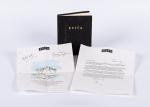
Vere Foster, The Two Duchesses - Presentation copy with important manuscript letter [signed and inscribed]

7528. Foster, Vere [Henry Louis / Lewis] / [Georgiana Duchess of Devonshire / Elizabeth, Duchess of Devonshire].

The Two Duchesses – Georgiana, Duchess of Devonshire / Elizabeth, Duchess of Devonshire – Family Correspondence of and Relating to Georgiana, Duchess of Devonshire / Elizabeth, Duchess of Devonshire, Earl of Bristol (Bishop of Derby), The Countess of Bristol, Lord and Lady Byron, The Earl of Aberdeen, Sir Augustus Foster Bart, and Others, 1777-1859. First Edition. With 17 illustrations.

London / Glasgow and Dublin, Blackie & Son Limited, 1898. Octavo (16 cm x 22,5 cm). XII, 497 pages with 16 full-page-illustrations and one small vignette, showing the Two Duchesses in cordial embrace. Hardcover / Original, green publisher’s cloth with gilt lettering and ornament to spine and armorial supralibro to cover with the Motto of the “British chivalric Order of the Garter”: “Honi soit qui mal y pense” [″shame on anyone who thinks evil of it”]. Very good condition with some minor signs of wear only. “Presentation Copy of “The Two Duchesses” with Autograph / Manuscript – Letter by Vere Foster to his niece, Emily Albinia “Alba” Foster. With a stunning, unpublished, two-page manuscript letter, revealing several important details about the immediately favorable reviews and reception of the book “Two Duchesses” [″in the Daily Telegraph”] and Vere Foster’s disdain about some criticism from one J.Donohue [which led to an alteration in the second edition of the book]. Vere Foster is also expecting a review to appear in the “Athenaeum” but reports: “the Athenaeum has nothing yet”. Vere Foster apologizes to his niece for the delay in sending the book and explains that he had left 12 “parcels” with Blackie’s agent and gave instructions to send them, but a few days later found they had been “untouched”. One of the most important finds of Vere Foster – Material in recent years with no sign of similar material on offer in the past years on the international market.

Show details

Alice Curtayne Portrait

7534. Curtayne, Alice.

Alice Curtayne Collection: Alice Curtayne and “The Capuchin Annual”. A collection of essays, contributed by Alice Curtayne to one of Ireland’s most important Periodicals of the 20th century. The collection includes the early 1931 issue with the beautiful portrait of youthful Alice Curtayne. While the collection is still growing, unknown essays and contributions of her are surfacing [Please offer interesting material, letters, signed books etc.]. The Capuchin Annual – Collection of Alice Curtayne Material includes at the moment: 1. Alice Curtayne – “For the Septcentenary of St.Anthony of Padua (1231 – 1931) – A Study of St.Anthony the Preacher” [in: “The Capuchin Annual for the year 1931” / Including the early Curtayne-Portrait and three text-illustrations] / 2. Alice Curtayne – “Five Irish Saints”: “The Living Patrick” / “Saint Colmcille – Irishman” / “Saint Brendan – The Navigator” / “Saint Ita” / “The Method of Saint Columbus” – (In: Capuchin Annual 1945-1946 – with Illustrations in color by Stained Glass Artist, Rísteard Ó Cíonga [Richard King]).

Dublin, The Father Mathew Record Office, 1930 / 1945. Octavo (18 cm x 25 cm). Pagination for the Curtayne – contribution in Capuchin Annual 1931 [Second Year of Publication of the Annual]: 8 pages (pages 18 – 25) / Pagination for the Curtayne – contribution in Capuchin Annual 1945-1946 [Sixteenth Year of Publication of the Annual]: 9 pages (pages 269 – 277) plus Frontispiece and 4 further full-page-illustrations of Saints in color by the Risteárd Ó Cionga [Richard King]. Original illustrated Softcover. Good condition with some signs of wear (fraying to cover).

EUR 3.800,-- 

Show details   Add to cart

McKevitt, Christus Rex - An Irish Quarterly Journal of Sociology. A Collection of 24 Volumes

7539. [Curtayne, Alice] / McKevitt, P. / Lucey, C. / Conway, J. Jacobus / Christus Rex Society of Irish Diocesan Priests / Rísteard Ó Cíonga [Richard King as Illustrator] / etc.

Alice Curtayne as Contributor to Irish Periodicals / Journals / Digests. The collection aims for completion and collects not only issues of periodicals with contributions by Alice Curtayne but hopes to complete each set of periodicals to which Alice Curtayne contributed between the years of 1930 and 1980, in order to allow for cross-referencing of contributors, study cooperation between illustrators and Alice Curtayne, her influence and acceptance as early female contributor in a men’s world, possibly even deciphering pseudonyms under which Curtayne might have written or essays she might have contributed to but her name was omitted; in general: circumstances which have not been detected yet. The Collection is documented thoroughly in professional images and descriptions on our website and includes to date: I. Alice Curtayne as Contributor to “The Irish Digest”: 1. “The Irish Digest” from September 1940 – including the article: Alice Curtayne – “Lament of an Author” / II. Alice Curtayne as Contributor to “Christus Rex”: “Christus Rex” – An Irish Quarterly Journal of Sociology. A Collection of 24 issues of the important and underrated publication “Christus Rex” including: 1. Volume XX, No.4 of “Christus Rex”: Alice Curtayne – “The Council and Women” ]. / III. Alice Curtayne as Contributor to “The Furrow”: “The Furrow” – Monthly Journal published by the Leinster Leader, Naas and Edited by Rev. J.G.McGarry. A Collection of 56 issues of the Journal, including two issues with Curtayne – publications: 1. “Saint Patrick in his Confession” – (In: “The Furrow” from March 1951) and 2. “Marillac Manor” (in “The Furrow” from July 1959) and 3. “Ecumenism in Dublin” (In “The Furrow” from February 1966) / IV. Alice Curtayne as Contributor to “The Capuchin Annual”. Including: 1. Alice Curtayne – “For the Septcentenary of St.Anthony of Padua (1231 – 1931)” – [including a portrait photograph of Alice Curtayne] / 2. Alice Curtayne – “Five Irish Saints” (″The Living Patrick” / “Saint Colmcille – Irishman” / “Saint Brendan – The Navigator” / “Saint Ita” / “The Method of Saint Columbus” / (In: Capuchin Annual 1945-1946 – with Illustrations in color by Stained Glass Artist, Rísteard Ó Cíonga [Richard King].

Naas, Christus Rex Publications, 1949 – 1967. Octavo. 81 Issues with different amounts of pages and content. Overall c. 4800 pages. Original Softcover. Excellent condition with some minor signs of wear only. Some of the issues with annotations and some with a former library-stamp. Very rare run of these periodicals which invited contributions from other women writers like Ita Meehan.

Show details

Collection of interesting and important publications on and by Walter Benjamin

7540. [Walter Benjamin Collection] – Benjamin, Walter / Rang, Florens Christian / Rosenzweig, Franz.

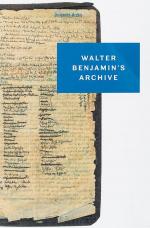
Collection of interesting and important publications on and by Walter Benjamin, one of the most influential philosophers and aesthetic influencers of the 20th century. While the collection already contains a number of important publications, literary criticism and even a signed and annotated working-copy of Franz Rosenzweig’s “Stern der Erlösung” by Benjamin’s friend Florens Christian Rang, the collection is a work in progress and we invite offers from collectors and dealers. You can see detailed photography and descriptions in our section “Libraries & Collections”. So far the collection includes: 1. A stunning set of “Die Literarische Welt”, with many first edition articles by Benjamin and his contemporaries. Two Volumes with 94 Issues in total (31 issues in duplicate / 31 Hefte doppelt). Berlin, Ernst Rowohlt, 1925 – 1927. This original set of the early and fragile periodical with an abundance of essays, articles and reviews by Benjamin, are some of the finest examples of Benjamin’s exciting and versatile voice, forward and opinionated reflections on film and literature etc. / 2. Fantastic Collection of eight [pristine] Volumes of Philosophical Writings and Biographical Works by and on Walter Benjamin [I.Walter Benjamin – Selected Writings. Volume I (1913-1926), Volume II (1927-1934), Volume III (1935-1938) and Volume IV (1938-1940) – Translated by Rodney Livingstone and others – Edited by Marcus Bullock and Michael W.Jennings, Howard Eiland and Gary Smith / V. The Correspondence of Walter Benjamin (1910-1940) – Edited and Annotated by Gershom Scholem and Theodor W.Adorno – Translated by Manfred R.Jacobson and Evelyn M. Jacobson / VI. Walter Benjamin – Early Writings (1910 – 1917) – Translated by Howard Eiland and Others / VII. Theodor W. Adorno & Walter Benjamin – The Complete Correspondence (1928 – 1940) / VIII. Walter Benjamin – The Arcades Project – Translated by Howard Eiland and Kevin McLaughlin] / 3.[Benjamin, Walter] Baudelaire, Charles. Tableaux Parisiens. Deutsche Übertragung mit einem Vorwort über “Die Aufgabe des Übersetzers” von Walter Benjamin. / 4. Doderer, Klaus – Walter Benjamin und die Kinderliteratur. Aspekte der Kinderkulter in den zwanziger Jahren / 5. Berger, Willy R. – Walter Benjamin als Übersetzer Baudelaires [Aufsatz in: Teilnahme und Spiegelung. Festschrift für Horst Rüdiger] / Missac, Pierre. Walter Benjamin’s Passages. / 6. [Benjamin, Walter] Leinweber, J. Walter Benjamin – Sammlung J. Leinweber. [Mit einem Vorwort von Iring Fetscher]. Marburg, Antiquariat Dr. Jörg Leinweber, 1996. / 7. Walter Benjamin, Neuester Orbis Pictus oder Die Welt in Bildern für fromme Kinder. Aus der Sammlung von Walter Benjamin. Faksimiledruck im Inselverlag. / 8. [Rang, Florens Christian / Benjamin, Walter] Rosenzweig, Franz. Der Stern der Erlösung [Hand-Exemplar / Arbeitsexemplar des Walter Benjamin-Freundes “Florens Christian Rang”. Voll signiert von Rang auf dem Titelblatt. Besitzvermerk Rang’s in Tinte. Mit interessanten Text-Markierungen Rang’s in Buntstift und Bleistift, sowie zwei Annotationen zu Text-Verweisen im hinteren Einbanddeckel. Bedeutender Fund für die Florens Christian Rang-Forschung da Walter Benjamin beide, Franz Rosenzweig und Florens Christian Rang in einem Atemzug als bedeutende Kämpfer “gegen die Idolatrie des Geistes” nennt. Die Anstreichungen in Rosenzweig’s Werk bestätigen Benjamin’s Auffassung da Sie uns erlauben Rang’s Wandlung vom Nationalisten zum politisch moderat eingestellten Konservativen teilweise nachvollziehen zu koennen. Die Publikation Rosenzweigs fällt ausserdem in die kritische Phase von Rang’s Wandlung. Die “Deutsche Bauhütte”, Rang’s publizistisches Testament seiner Entfernung vom Nationalismus, erscheint nur drei Jahre später./ Association-copy with extremely interesting text-markings and some annotations to rear pastedown by Walter Benjamin’s friend, “Florens Christian Rang”/ Of utmost interest for the evaluation of Rang’s development from nationalist to empathetic centrist. Benjamin famously mentions both, Florens Christian Rang and Franz Rosenzweig as equally important influences for his Generation in “fighting the Idolatry of the Spirit/Mind”. This makes Rang’s personal copy of Rosenzweig’s masterpiece an enormously interesting find; possibly even a key to Rang’s ideological and religious transformation]. Erste Ausgabe. Frankfurt am Main, J.Kauffmann Verlag, 1921. / 9. [Benjamin, Walter] – Walter Benjamin’s Archive – Images – Texts – Signs. Translated by Esther Leslie. Edited by Ursula Marx – Gudrun Schwarz – Michael Schwarz – Erdmut Wizisla. / 10. Walter Benjamin – Angelus Novus. Mit 4 ganzseitigen Holzschnitten von Gisela Oberbeck. Signierte, limitierte Auflage von nur 90 Exemplaren. / 11. Hans Puttnies & Gary Smith – Benjaminiana. /

Berlin and others, 1923 – 1980. Octavo. Original Hardcover / Original Softcover. Very good condition with only minor signs of wear.

EUR 8.800,-- 

Show details   Add to cart

Small Archive of personal correspondence between irish-american writer John Montague and irish artist Louis Le Brocquy plus many and related items

7547. Le Brocquy, Louis / Montague, John / [Dupin, Jacques] / [Samuel Beckett].

Small Archive of personal correspondence between irish-american writer John Montague and irish artist Louis Le Brocquy plus many related items. The correspondence also includes John Montague touching on Samuel Beckett. The core of the collection includes 1. Extremely insightful and important, very personal manuscript-letter from John Montague to Louis Le Brocquy – Inside an envelope addressed by John Montague to Louis Le Brocquy at his french residence ‘Domaine des Combes’ with Louis Le Brocquy’s answer carefully tucked into the same envelope, treasured by John Montague. The densely filled, very personal 4-page-manuscript letter from John Montague, is dated Christmas 1981, written after “a sabbatical [..] on a long tour which led me as far as Los Angeles” and is a strong reflection of John Montague’s personal struggles, thoughts and influences as a writer; he talks about his ten years of teaching in the US “after O’Riada’s death led to a vacuum” and “enduring the semi-bourgeois limbo of Cork”. Montague speaks about the time “after the harness came off” and he “felt quite strange, and after thirty years my stammer returned in painful, nearly uncontrollable force”. Montague even touches on his fears about his health and continues “I clocked into a clinic for a rest cure….so far liver excellent, so it is not Sean or Brendan all over again (in any case, loving the stuff, as you do, I can’t overdrink; the tastebuds are against it)”. Montague dives into comparisons with Samuel Beckett: “″Did you realize that Sam Beckett was under analysis at the Tavistock Clinic for two years ? – The early Beckett is a smart alec; the break comes when he has to survive in post-war France and accept “his own darkness”. Montague also touches on his struggle with his mother “Isn’t it terrible that we spend up to nearly middle-[a]ge coping with the traumas of youth, with no way round it ? – I have cleared/cleaned/buried & forgiven my mother in my next book “The Dead Kingdom”….” – The letter continues to talk about books, “the Landslide Manuscript”, poetry and his work etc. etc. He mentions a Dupin “play” which “will travel in my Paris luggage”. Montague also touches on the subject of the Irish Troubles and writes “I have always, by the way, believed that 1916 may have been a mistake as Yeats said: “For England may keep faith – For all is said and done” / Montague speaks about “My own area of Tyrone is blessedly free from all but minor incidents” – Amazing document of confidence and trust between two irish landmark personalities. 2. Louis Le Brocquy’s answer to John Montague is dated “New Year’s Day 1981”[which should have been 1982]: A. Very personal manuscript Letter – a direct answer to Montague’s letter from “Christmas 1981” (1 sheet with both pages filled in ink and signed “Louis”) in which Le Brocquy reflects on the tense political situation with Northern Ireland and the overall worldwide tension of a looming war / Le Brocquy writes that he did have a “wild hope that when Charlie took office…that he and Thatcher might between them opted a ‘Rhodesian’ solution in the North” / Le Brocquy also writes about the eagerly awaited publication of “Selected Poems” of John Montague and he also asks John if “you thought of collecting Esteban’s and Dupin’s poems in French with your translations ?” – Le Brocquy offers to help with illustrations etc. – Both letters together in an envelope which suggests that John Montague received his letter to Louis le Brocquy back from the Le Brocquy-estate after Le Brocquy’s death. / Also included: B. A manuscript postcard with Le Brocquy’s “Girl in White” as a postcard-reproduction in which Le Brocquy suggests a project with John Montague and sends greetings to Montague’s wife Evelyn and the kids (in envelope from Carros,France) / C. In his function as chairman of Amnesty International, Le Brocquy sends a callout by Amnesty International to John Montague and kindly asks him to support the cause. He sends the callout to John by adding a few manuscript, personal lines of affection (in envelope from Carros,France).

France / Ireland, Carros / Cork, 1980-1981. A4. 4 pages on two sheets (main Montague-letter), 2 pages on 1 sheet (Le Brocquy – answer), 1 postcard, 1 manuscript-letter from Jacques Dupin to John Montague (25.10.1978) about a translation of “L’Éboulement” (Dupin also speaks about Louis le Brocquy in the letter), several pages of letters (mostly typed and signed) from other figures in irish and international literature and art. Original Envelopes. Very good condition with only minor signs of external wear. Besides some ephemeral materials from personalities in Literature and Art, addressed to John Montague, the small collection includes several vintage photographs of John Montague, taken during his acceptance of a honorary Doctorate of Literature at UCC, Cork, as well as a Legislative Resolution by the State of New York (Senator Daly), recognizing and thanking the distinguished author and poet John Montague with this decree on May 26, 1987. Among the lesser interesting materials is a pamphlet titled “Ireland’s Literary Renaissance – 20th century Portraits” in which portraits by Louis Le Brocquy of John Montague and Thomas Kinsella are included. The pamphlet is accompanied by a letter from James White to John Montague in which he explains this being a publication that was released for an exhibition in Chicago and he apologises for the entries being “necessarily short but hopefully reasonably correct”. Provenance: From the private collection of John Montague’s papers in his recently sold West Cork Home.

Show details

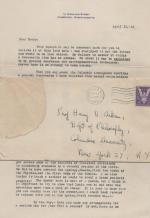
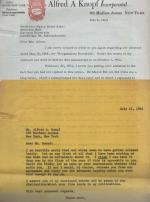
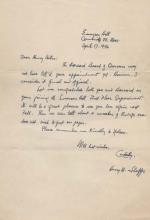
Typed Letter signed from american philosopher John Wild to Philosopher Henry David Aiken

7550. [Maluf, Brother Francis] Wild, John / Aiken, Henry D.

Typed Letter signed from american philosopher John Wild to Philosopher Henry David Aiken, informing Aiken: “I missed you especially two weeks ago when I attempted to defend a realistic view of ethics in terms of the concept of natural law. I am not sure, but I think you might have been in agreement with some of the points I tried to make as over against Lewis’ Kantian subjectivism and Demos’ [Raphael Demos] extreme Platonism….”. Besides some further niceties, John Wild talks in this letter intensely about Christian Arab Philosopher Francis Maluf, from Mashrah, Lebanon, who could be in John Wild’s mind the perfect “section man for your Phil A course”. Wild continues to praise the syrian, Maluf, who had been “teaching Mathematics and Physics in a war job out of Worcester and who has been keeping up his interest in philosophy by attenting courses around here, organizing discussion groups and other intellectual activities which amaze me by their versatility and intensity”. John Wild continues: “He has been offered a permanent job at the University of Beirut in Syria to teach Philosophy there (he is a friend of Malik’s) but if possible wants to stay around here for another year to study and learn before he goes back.” [Maluf had converted to catholicism in 1940 and was later known as Brother Francis Maluf.

Cambridge, April 15th, 1945. Octavo. 2 pages. Softcover. Very good condition with only minor signs of wear. Original two-page-letter with original envelope.

Show details

Hans Jonas / Henry David Aiken, Typed letter, signed by German-born, American Jewish philosopher Hans Jonas

7551. Aiken, Henry David / [Hans Jonas] / Quine, W.V.O.

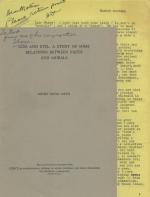
Typed letter, signed by German-born, American Jewish philosopher Hans Jonas, loosely inserted in Henry David Aiken’s pamphlet “God and Evil: A Study of Some Relations Between Faith and Morals”. The Essay by Aiken is inscribed and signed by Aiken in a sarcastic manner: “To God, from one of his congregation – Shem”. In the letter, Jonas reflects on two pages on an evening with Henry David Aiken and his then wife Lillian Woodworth. In his letter to Aiken, Hans Jonas reports back to Aiken after reading his essay [″God and Evil”] and calls it “a beautiful piece of work – in style and content worthy of your “master” who wrote on natural theology….”. Jonas goes on encouraging Aiken: “you are also dead wrong n not publishing a collection of your essays in ethical theory. If your pal Quine can do it “from a logical point of you [sic]”, so can you “from a moral point of view”. Jonas also mentions “that it is worth writing about the ancient problem opf a theodicy in a contemporary context”. [The Essay is n Offprint from Ethics, An International Journal of Social, Political and Legal Philosophy, Volume LXVIII, No. 2].

New York / Washington, DC, 1958. 16,8 x 24 cm. 21 pages (pages 77-97 of the Journal) plus two page-letter (on one leaf), signed by Hans Jonas Original Offprint / Original TLS (Typed letter signed). Very good+ condition. Stapled. Only minimal signs of staining. The letter also discusses a Reference for one “Ed Sayles” and Jonas suggest that Aiken writes “casual but fairly strong” to Howard R. Bartlett, professor of history and head of the Department of Humanities at MIT.

Show details

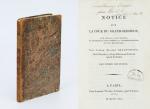
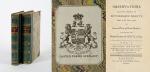
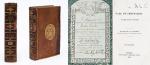
Gilpin / Castle Freke Library - Observations Relative Chiefly to Picturesque Beauty, Made in the Year 1776

7557. Gilpin, William. [Castle-Freke Library Bookplates]

Collection of four Volumes (bound in two) by Gilpin – All from the historical library at Castle Freke (Castlefreke, West Cork / Ireland). The Volumes include: I. & II. Observations Relative Chiefly to Picturesque Beauty, Made in the Year 1776, on Several Parts of Great Britain; particularly the High-Lands of Scotland. [Second Edition, with an “Account of the Prints” bound to the rear] / III. Observations on the River Wye and several Parts of South Wales &c. relative chiefly to Picturesque Beauty; Made in the summer of the Year 1770 (Third Edition). / IV. An Essay on Prints – [″The chief intention of the following work was to put the elegant amusement of collecting prints, on a more rational footing; by giving the unexperienced collector a few principles and cautions to assist him”] (Fourth Edition with the printed dedication “To the Honorable Horace Walpole in Deference to his Taste in the Polite Arts; and the Valuable Researches he has made to improve them; the following work is inscribed by his most obedient and very humble servant, William Gilpin”). [Volumes I & II with 40 original illustrations and vintage 18th century maps [correctly 39 illustrations and one table], for example of Loch Lomond and the Firth of Forth/ all illustrations are vintage mezzotint-plates].

Mixed Editions. Four Volumes (bound in two). London, Printed for R. Blamire, Strand, 1792. Octavo. Pagination: Volume I: XI, [1], 221 pages with 24 mezzotints / Volume II: 195, XVI pages with 16 mezzotints and an “Account of the Prints” as well as “Translations of Latin Passages” / [Volume III]: [River Wye]: XVI, 152 pages with 16 (of 17) full – page mezzotints / [Volume IV]: [An Essay on Prints]: XIII, [3], 174 pages plus XI pages Index and 1 page Errata. Hardcover / Early 19th century quarter – morocco with gilt lettering and ornament on spine. Both volumes bound in unison. Very good + condition with only minor signs of external wear. Pages 185 – 191 of Volume I with some stronger browning. Otherwise the interior very clean. All mezzotints in very good or even better condition. This is the original copy from the historical Castle-Freke Library in West Cork (Ireland), with two armorial bookplates to front and rear pastedown with the family’s motto ‘Pro Patria’. With two pages of manuscript annotations by a contemporary hand with a reference between the common name “Tarbet” in Scotland and a place-name in County Kerry in Ireland” (pages 13 of Volume II) / another entry is on page 12 of Volume II regarding the name-sake “Loch-Loung” for a Lake of ships in Scotland and Ireland.

Show details

[Freke Family Provenance] / [Jacobo Freke ["Jacob"] / Scott, Sir Walter.

7559. [Freke Family Provenance] / [Jacobo Freke [″Jacob”] / [Henry Longfield Conner, Manch] Scott, Sir Walter.

Collection of Works by Sir Walter Scott. Armorial Prize bindings with gilted crests to front and rear boards from Trinity-College Dublin, given to First Class Classics – Student [Literis Humanioribus] Jacobo Freke by Vice Provost Henry Wray (signed) between the years 1823 and 1828. The Collection includes: 1. Walter Scott – The Lay of the Last Minstrel – A Poem (The Twelth Edition, London, 1811) / 2. Walter Scott – The Lady of the Lake – A Poem (The Ninth Edition, Edinburgh, 1811 – Plays in the vicinity of Loch Katrine in the Western Highlands of Perthshire / With Notes to the Cantos) / 3. Walter Scott – Marmion: A Tale of Flodden Field. (The Seventh Edition, Edinburgh, 1811) / 4. Walter Scott – Rokery – A Poem (The Third Edition, Edinburgh, 1813) / 5. Walter Scott – The Lord of the Isles – A Poem (The Fourth Edition, Edinburgh, 1815). With the handwritten entry on the first page: “The Freke Books were given to me by the last of his daughter’s Sidney – 1936” [Written by Henry Longfield Conner].

Five Volumes. London / Edinburgh, Printed for Longman, Hurst , Rees, Orme and Brown and A.Constable and Co. Edinburgh; By James Ballantyne & Co. Edinburgh, 1811 – 1815. Octavo. 349, 433, 377, CXXVIII, 413, 443 pages. Hardcover / Original full leather in Mylar. Stunning, Armorial Prize bindings with gilted crests to front and rear boards from Trinity-College Dublin: “Reg. Elizabeth Juxta Dublin Coll. Sanctae Individuae Trinitatis”. Bindings worn and slightly cracked but all holding. From the library of Daniel Conner (Connerville / Manch House).

Show details

[Freke Family Provenance] / Castle Freke / Castlefreke / "Algy" Freke [Algernon (Algy) William George Evans-Freke

7560. [Freke, Henry (Evolution / Evolutionist)] / [Freke Family Provenance] / Castle Freke / Castlefreke / “Algy” Freke [Algernon (Algy) William George Evans-Freke, 9th Lord Carbery and his wife Mary Carbery] / Jacobo Freke [″Jacob”] / [Henry Longfield Conner, Manch] Poitevin, M.P.

Dictionnaire de la Langue Française – Glossaire Raisonné de la langue écrite et parlée [Personal copy of evolutionist Henry Freke, with his signature to the titlepage, dated 1851 in Paris, possibly obtained during his studies at Trinity College Dublin, between getting his M.B. in 1845 and his M.D. in 1855].

Paris, Librairie de F. Chamerot, 1851. Quarto (18 cm x 25,5 cm). XVI, 1040 pages. Hardcover / Original Half-leather with marbled-paper-covered-boards. Excellent, firm condition with some minor signs of wear only. Special edition: Signed by the editor M.P.Poitevin and publisher F.Chamerot. Provenance: Originally owned by early evolutionist Henry Freke [H.Freke], Paris, 1851 and passed on to extended family. From the library of Daniel Conner and Henry Longfield Conner (Connerville / Manch House who owned several Volumes of the Freke Family – Library, many with Armorial Bindings from Trinity College Dublin). With an important, further historical gift-inscription: “A.G.Freke, Kingstown, Nov. 1903 – given to me by aunt Mary [Carbery].” [this is Mary Carbery and Algernon (Algy) William George Evans-Freke, 9th Baron Carbery from the family of Castle Freke, West Cork].

Show details

Page: 1 2 ... 73 74 75 76 77 78 79 ... 81 82
: